Planning an outdoor event in Tampa? Tent rentals are one of the most important decisions you’ll make — and one of the most impactful. The right tent doesn’t just protect your guests from Florida’s unpredictable weather. It defines the entire atmosphere of your event.
Whether you’re hosting a corporate gathering on a waterfront lawn, a wedding reception under the stars, or a milestone party in your own backyard, the tent sets the boundaries everything else is built inside. Here’s how to think through style, size, and setup before you book.
Why the Tent Is the First Thing You Should Book
Florida gives you two things at once: beautiful outdoor venues and weather that refuses to cooperate. From June through September, afternoon thunderstorms roll through Tampa Bay on a near-daily schedule, and summer temperatures regularly climb past 90 degrees. An outdoor event without cover is a gamble on both counts.
A tent removes that gamble. It turns a weather-dependent date into a reliable one, and it does the work whether the problem is rain, direct sun, or the humidity that settles in by mid-afternoon. Sidewalls can go up if a storm blows in sideways, and come off again the moment the sky clears.
Just as importantly, a tent gives shape to open ground. Beaches, waterfront lawns, estate grounds, and parking areas all offer space without structure — no walls, no ceiling, nothing to anchor a layout. A tent creates the room, and once you know its size and placement, every other decision gets easier: where the bar goes, how the tables flow, where guests enter, where the music lives. That is why the tent should be booked before the furniture, not after.
Shop this look

Choosing a Tent Style and Size That Fits Your Venue
Not every tent suits every site. The style you choose affects how the space feels, where it can physically be installed, and how much usable floor you actually get.
Frame tents
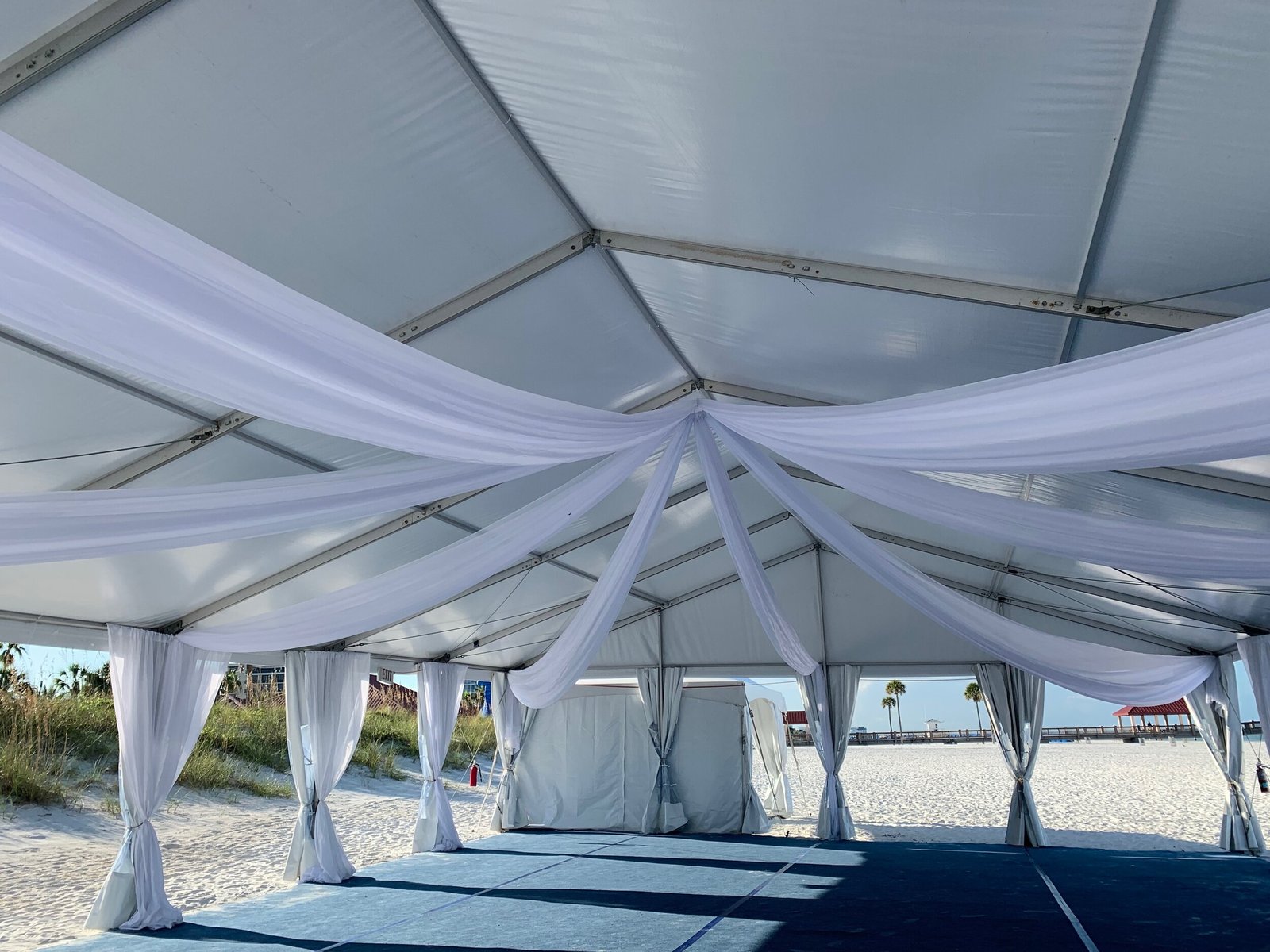
Frame tents carry their weight on an external structure, which means no interior poles interrupting the floor. That makes them the most flexible option for seating charts and dance floors, and because they do not require staking through the middle, they can be installed on sand, pavement, and hard surfaces where other styles cannot go.
Clear-top tents
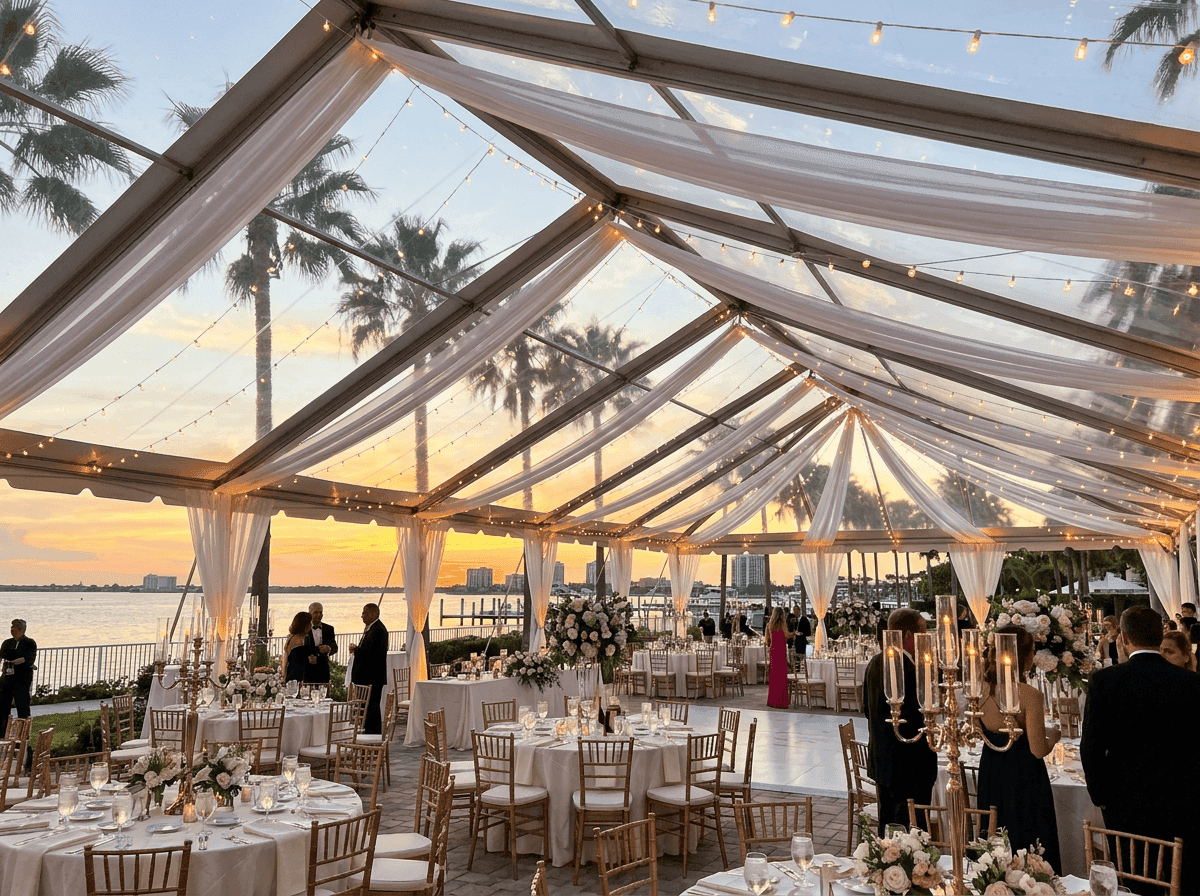
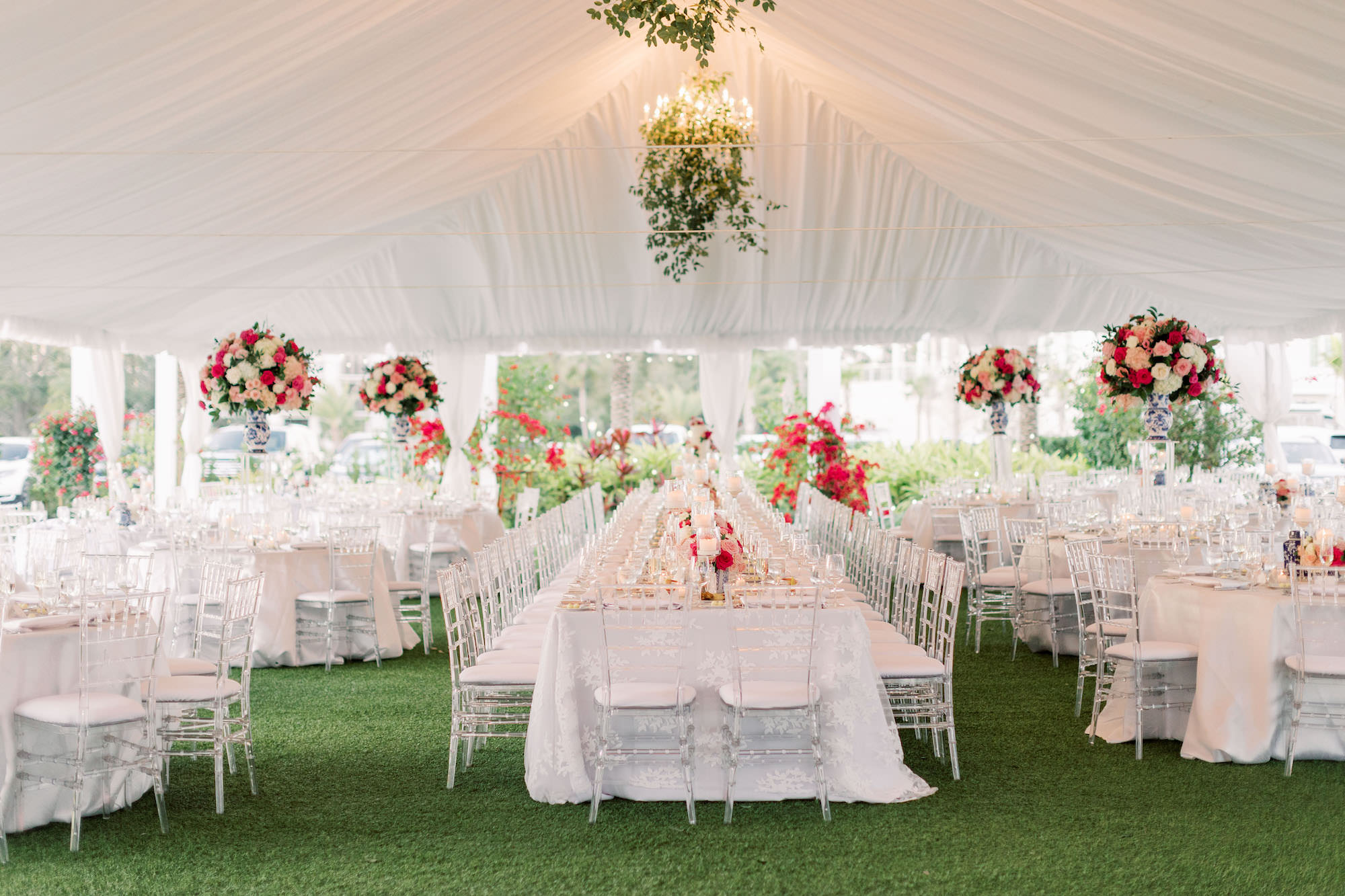
A clear top is the choice for evening events. It keeps the cover overhead while leaving the sky visible, and it pairs beautifully with string lights or chandeliers hung from the framework. For receptions that run past sunset, the effect is hard to match.
Pole and high-peak tents
Pole tents create that classic sweeping silhouette with peaks rising above the center. They need soft ground for staking and interior poles to hold the shape, so they work best on open grass where the layout can be planned around them.
Sizing is less about a formula than about what is happening underneath. A seated dinner needs considerably more room per guest than a standing cocktail hour, and every addition — dance floor, bar, buffet line, stage, head table — claims floor space of its own before you account for walkways between them. The reliable way to get it right is a site visit, where the venue, the ground, and your actual guest count can be measured together.
Shop this look


Installation, Add-Ons, and What Drives the Cost
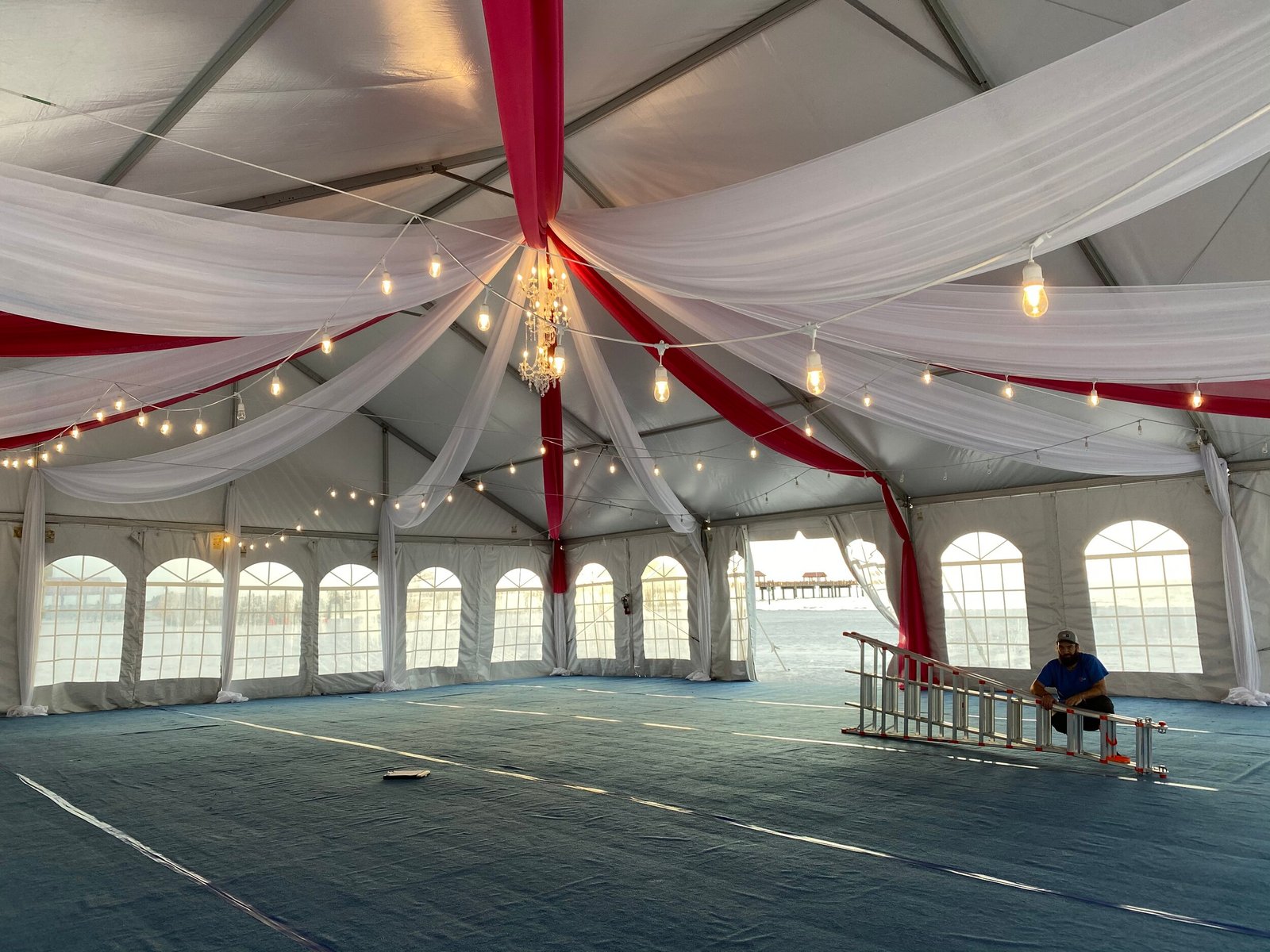
Tent rental should be a full-service arrangement: delivery, installation, and removal handled by a crew that does this every week. Tents are heavy, weather-sensitive equipment, and installing one correctly is not a task to hand to a volunteer with a truck.
When you are comparing companies, look for real Florida experience — a crew that has installed in coastal wind and August heat knows how to anchor properly and how to schedule around an afternoon storm. Ask about inventory breadth too, because a company that supplies the tent alongside the flooring, furniture, and lighting can coordinate the whole install as one job rather than three deliveries that have to be sequenced around each other.
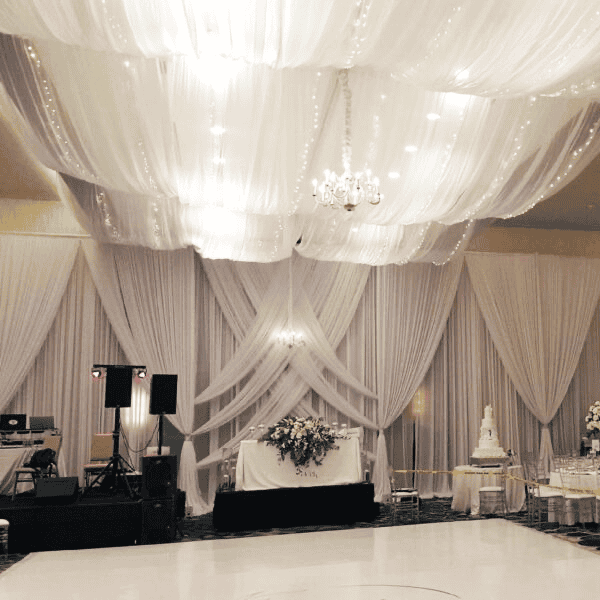
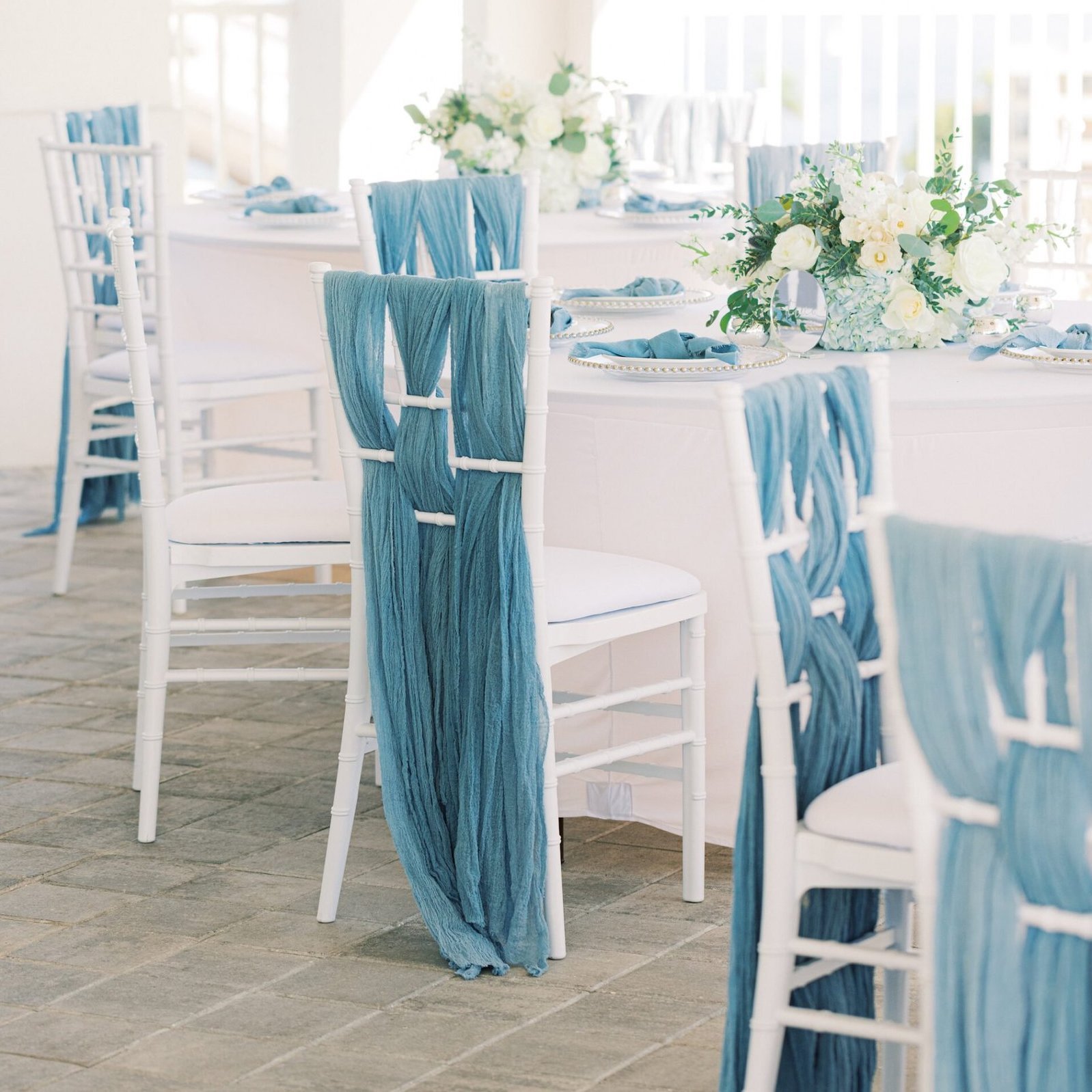
Add-ons are where a tent stops being shelter and starts being a venue. Flooring levels uneven ground and keeps heels out of the grass. Lighting extends the event well past sunset. Draping softens the ceiling and hides the structure. Climate control — fans or heaters depending on the month — keeps guests comfortable in either direction.
Cost tracks with all of it. Smaller frame tents start at a few hundred dollars, while large clear-top structures for weddings and corporate galas can range into the thousands. Size, style, add-ons, rental duration, and time of year all move the number. Peak season books early, so the sooner you request a quote based on your guest count, venue, and vision, the more options you will have.
Shop this look
Which tent style suits your location?
You can view our full range of tenting and flooring options in the online catalog, and our team is happy to help you coordinate these rentals based on your specific venue requirements, anticipated guest list, and the planned flow of your event schedule.