Angel and Dirrell were married inside the Tampa Museum of Art on a summer evening in front of 110 guests, and the venue had done half the styling before anyone arrived. Gallery walls hung with bold contemporary work, sculptural red forms suspended overhead, a bank of windows facing the water. This is a room with a point of view, and a Tampa Museum of Art wedding either argues with that or answers it. Angel and Dirrell answered: a strict black-and-white framework, then lemon, fuchsia and sky blue turned all the way up.
“Our vision was very modern and classy with a pop of bright color,” Angel said. “Dirrell is very traditional, black and white, and I am the pop of color energy.” The palette came from a set of photographs the couple call The Girls, which hang in their living room and travelled downtown for the day. Coastal Coordinating planned it, Carrie Wildes Photography shot it, and Gabro supplied the furniture, staging and tabletop that held the whole thing together.

Museums are among the hardest venues to style, and among the most rewarding. You generally cannot fix anything to a wall, move the art, or bring in open flame, and the lighting is set for paintings rather than for people. What you can bring is freestanding structure — staging, draping, seating, tabletop — and let that carry the design. Almost everything Gabro supplied here was chosen on exactly that basis.
A ceremony staged inside the gallery
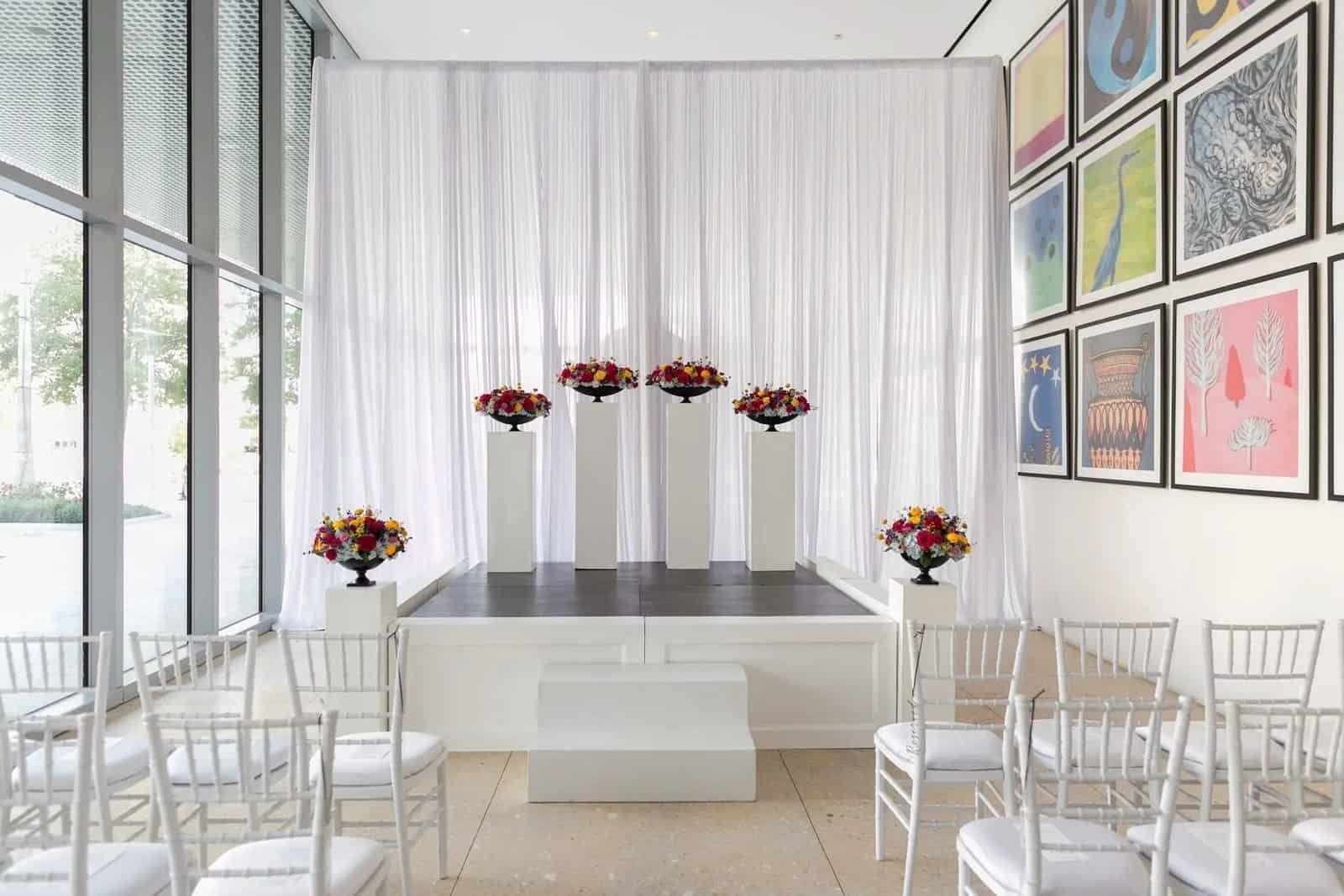
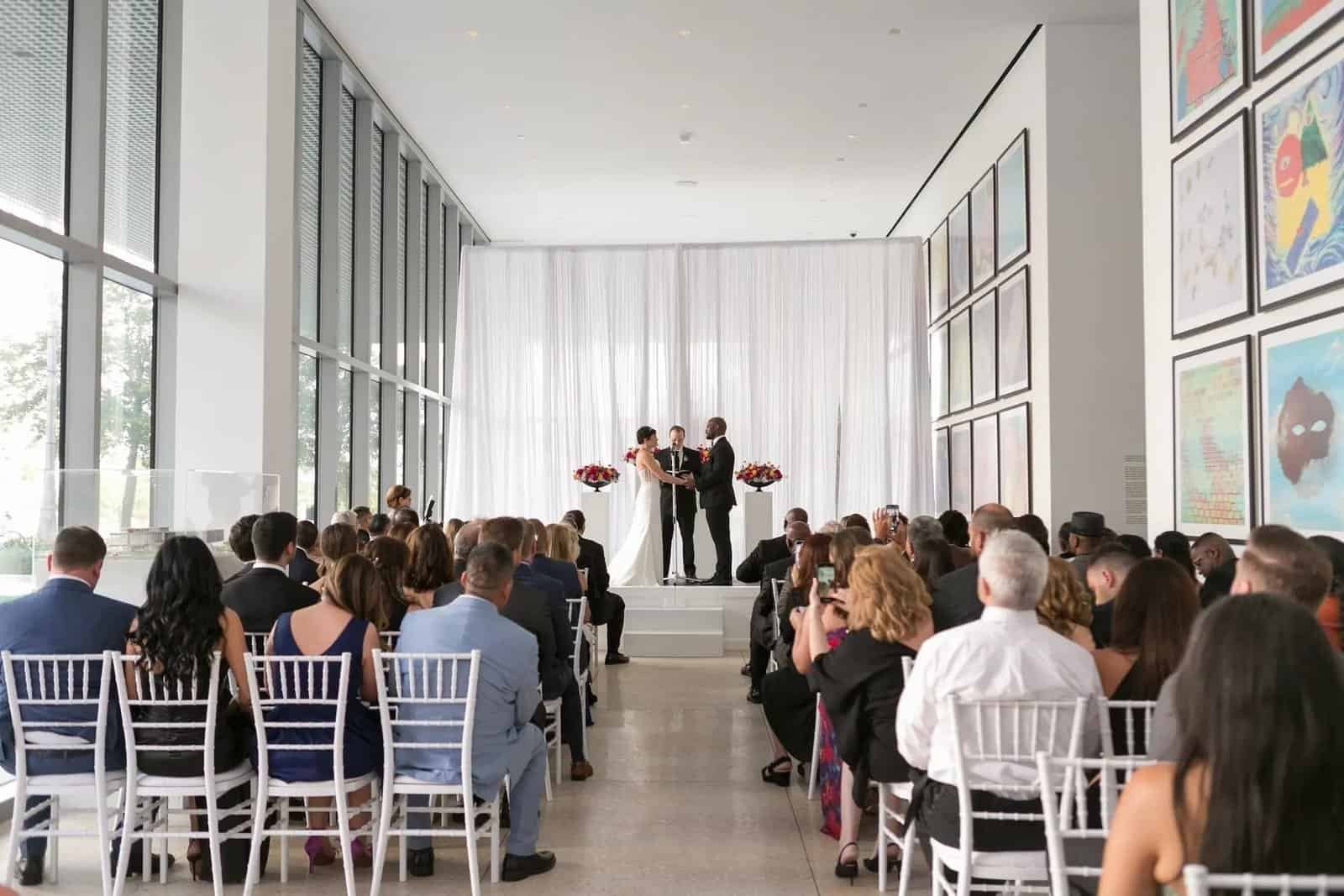
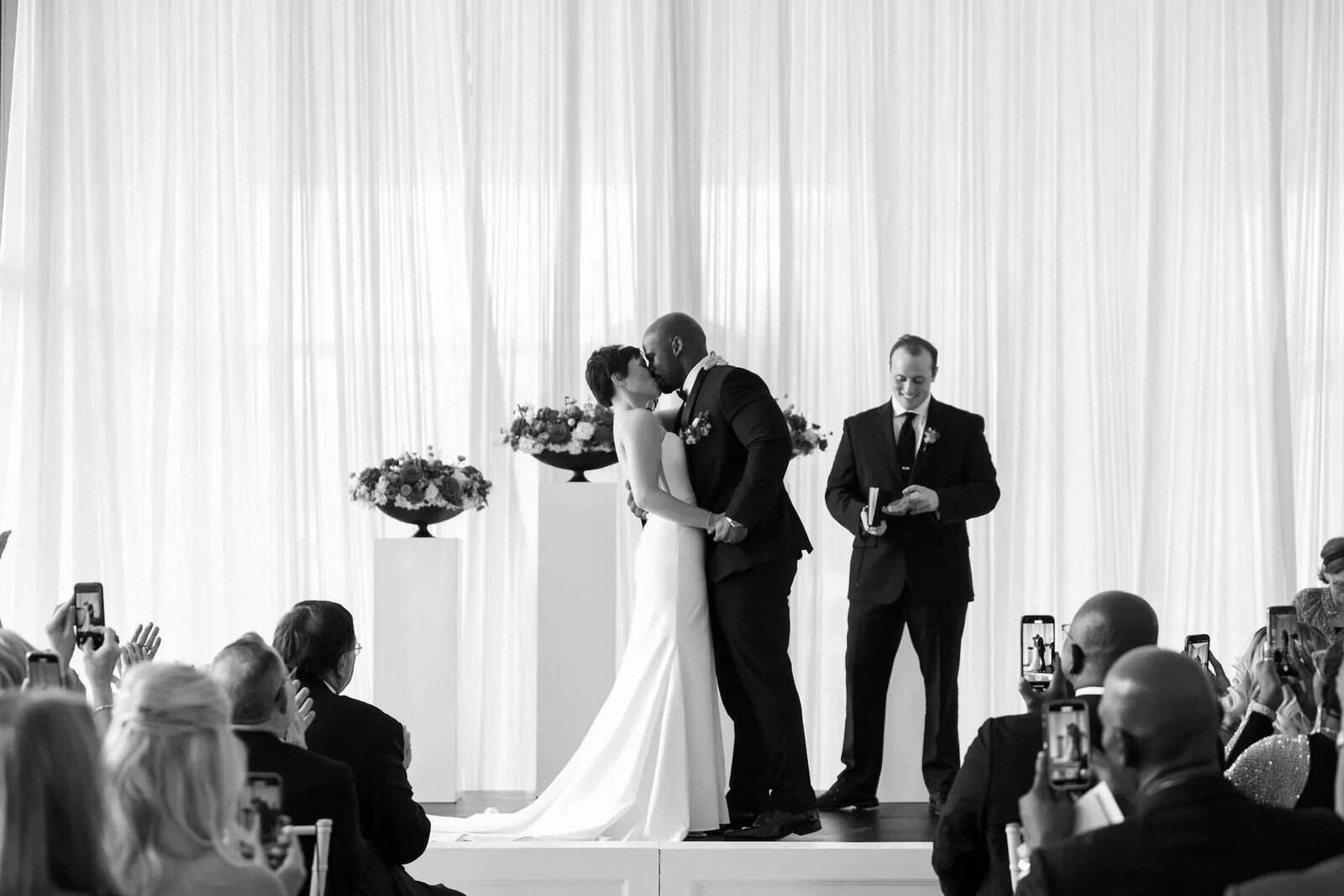
The ceremony ran the length of one of the museum’s gallery corridors — a long, narrow room where every wall was already spoken for. That shape creates one real problem: from row eight, you cannot see anything. A raised stage and facade solved it, lifting the couple clear of the seated guests so the vows stayed visible from the back. The facade closed the platform in cleanly, so what guests saw was a finished edge rather than staging hardware.
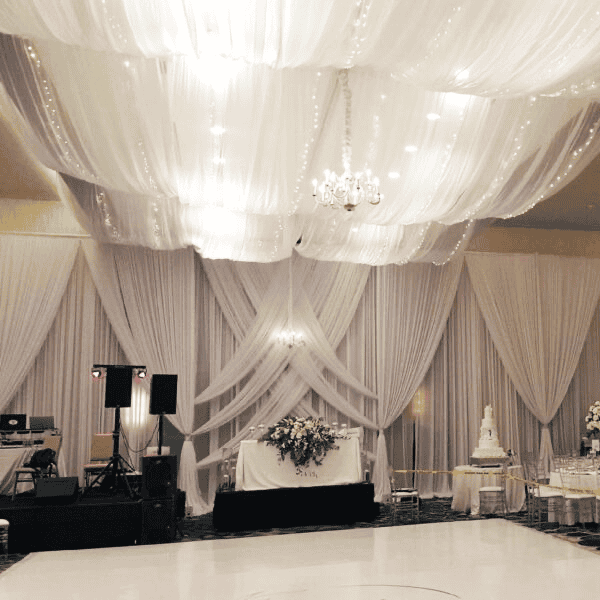
Behind the couple, white draping closed off the far end of the corridor. In a venue you are not allowed to alter — and a museum is exactly that — draping is usually the only way to create a backdrop at all. Here it did something more specific: in a room where every surface carried color, it gave the ceremony one deliberately quiet plane to sit against.
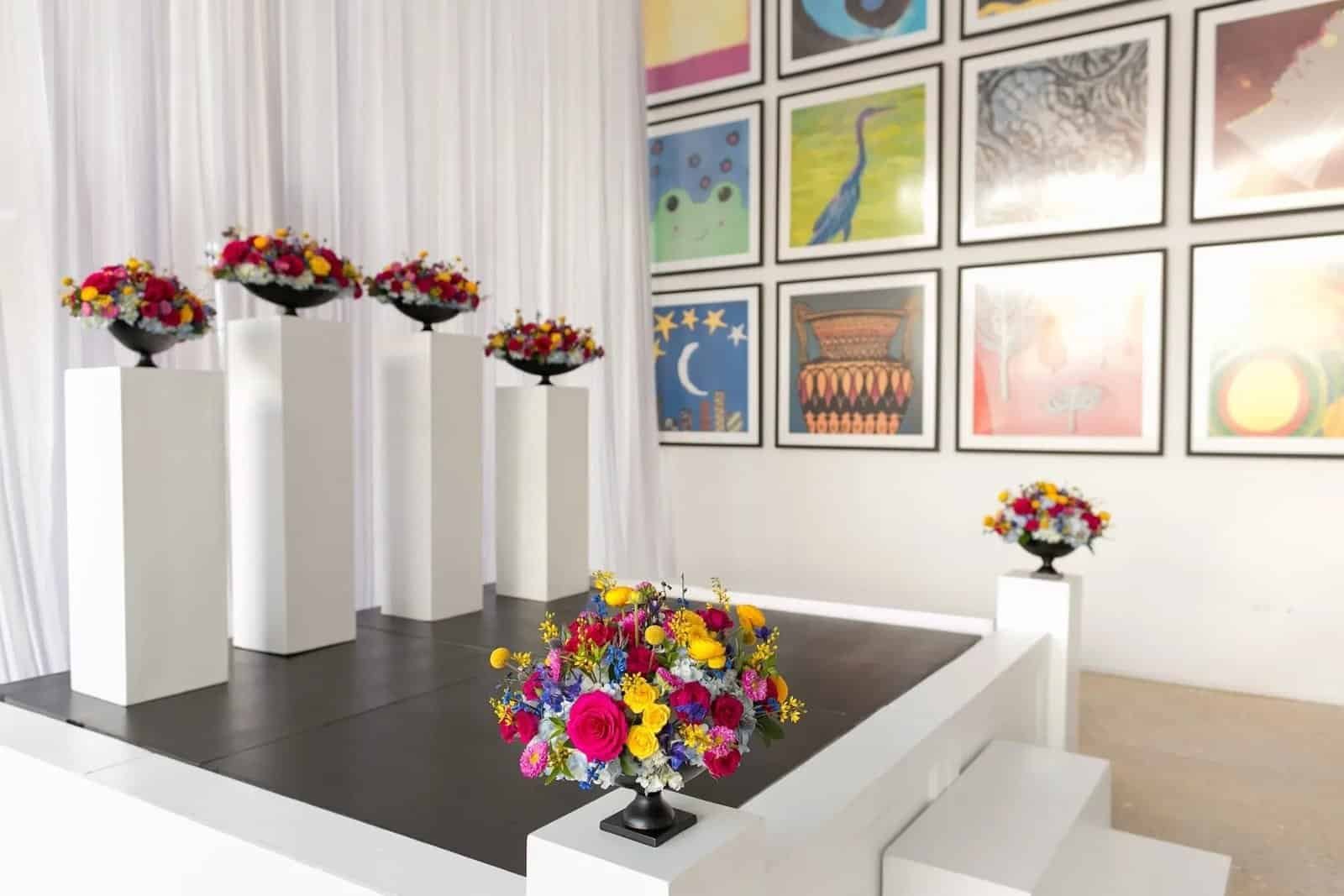
The aisle was lined with white chiavari chairs. White was the right call against dark gallery walls and heavily colored artwork; a darker frame would have crowded an already busy sightline, and the light frames keep the corridor feeling open from the elevated angle the stage created.
Black chiavari chairs against a wall of color
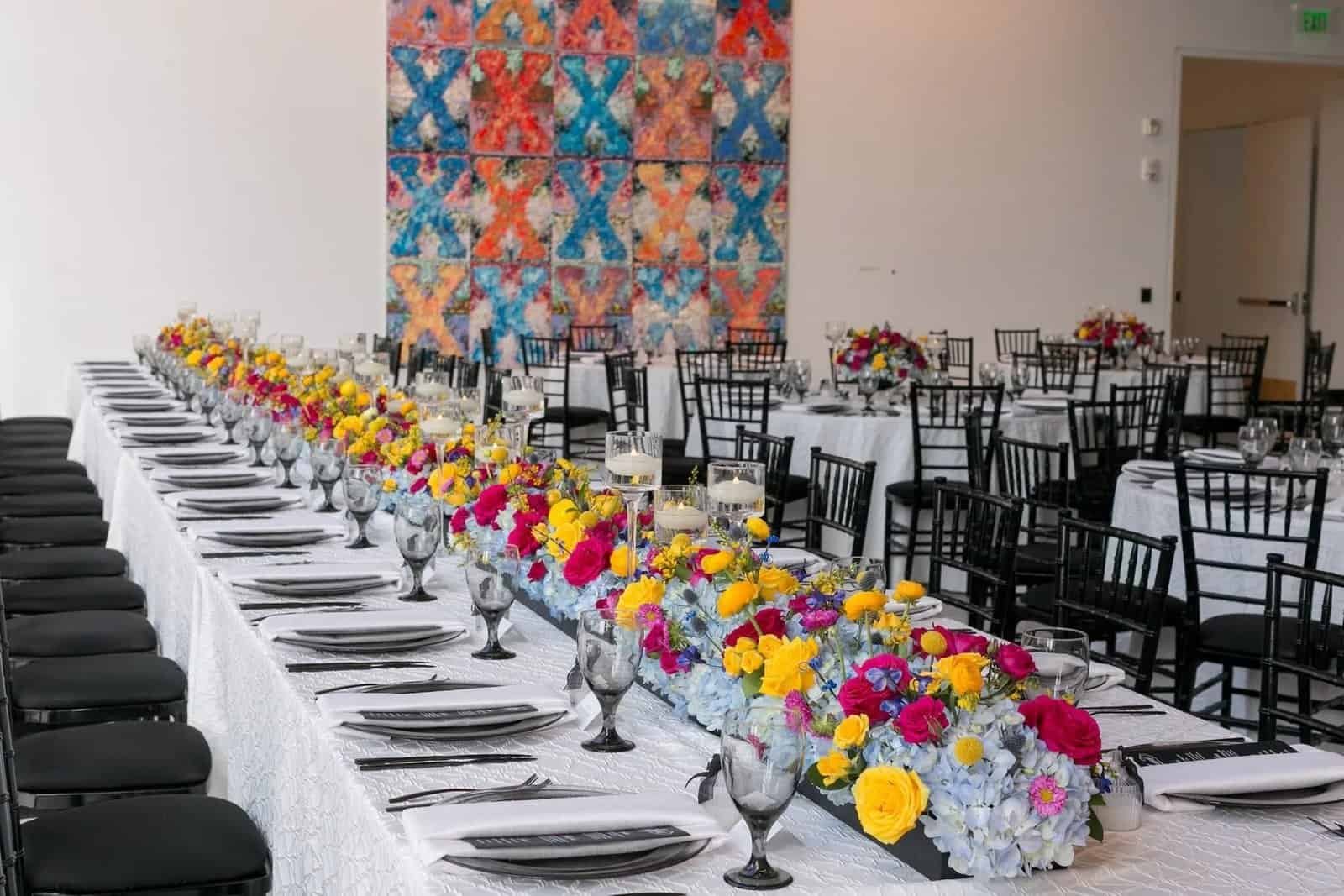
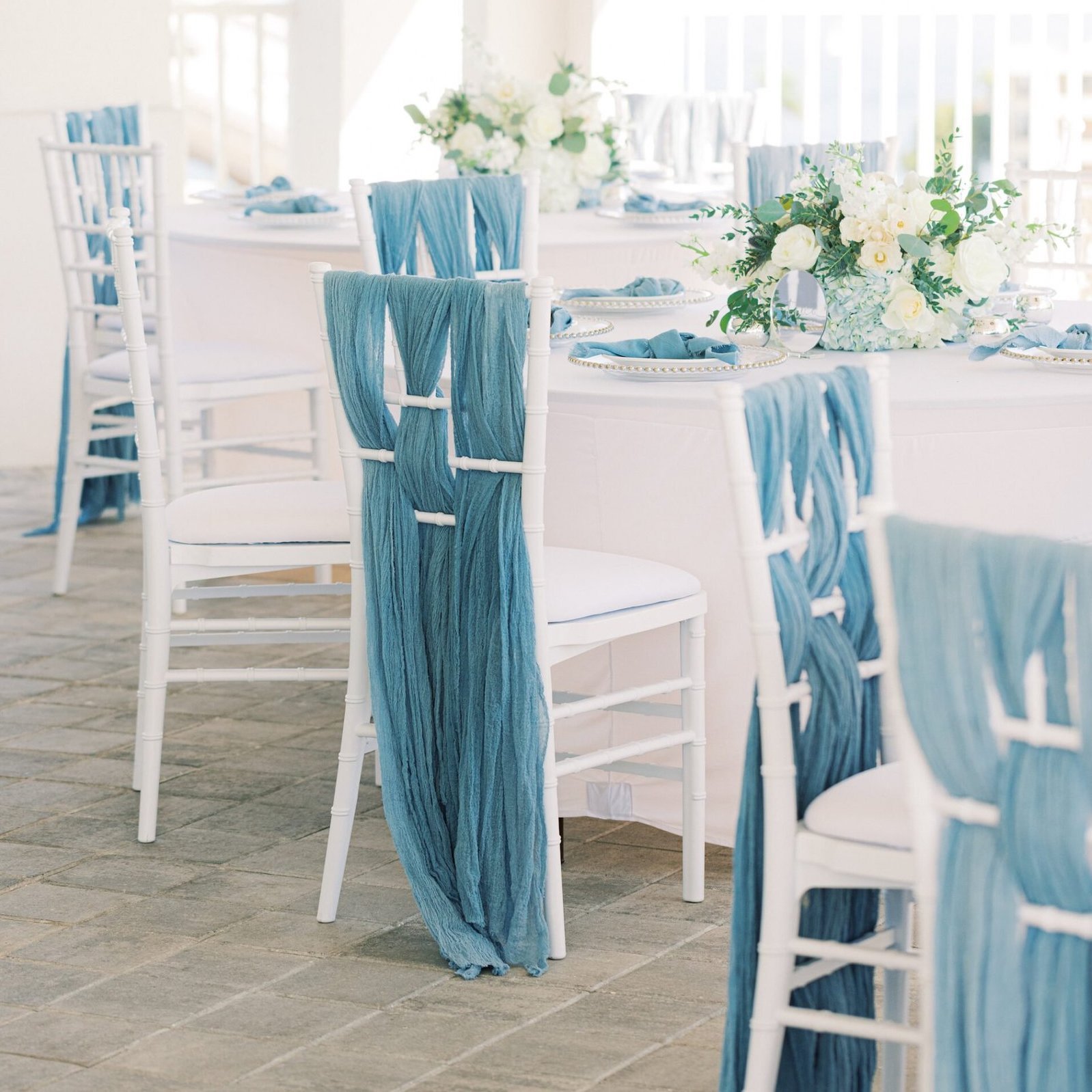
For dinner the same chiavari frame came back in black, and that single switch reorganised the room. The ceremony read white-on-color; the dining room reads black-on-white — dark frames against pale linen, with the flowers left as the brightest thing on the table. Using one chair family in two finishes is a quiet way to make two spaces feel related without making them identical.
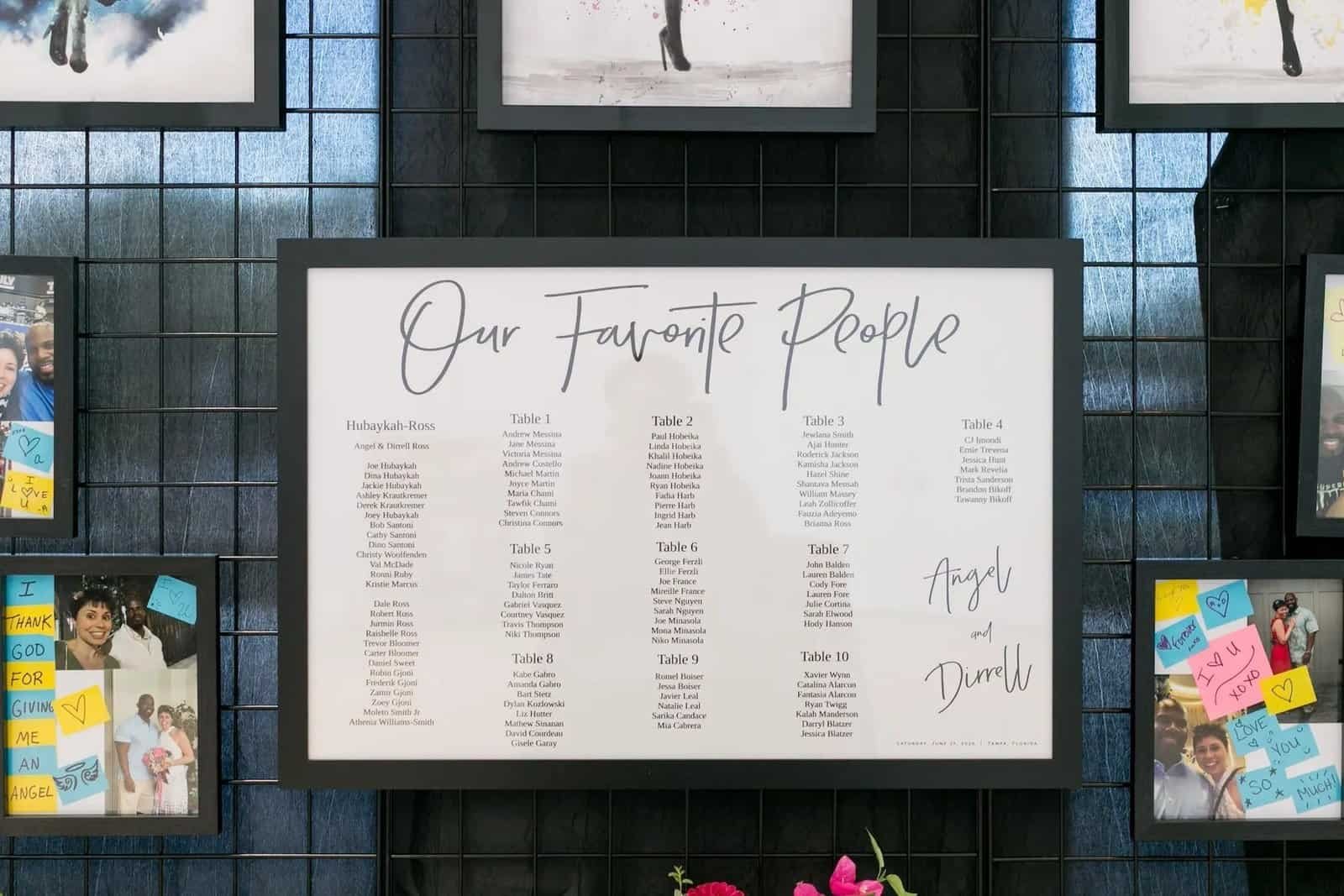
Guests found their tables from a framed display headed Our Favorite People, positioned at the entrance to the dining room.
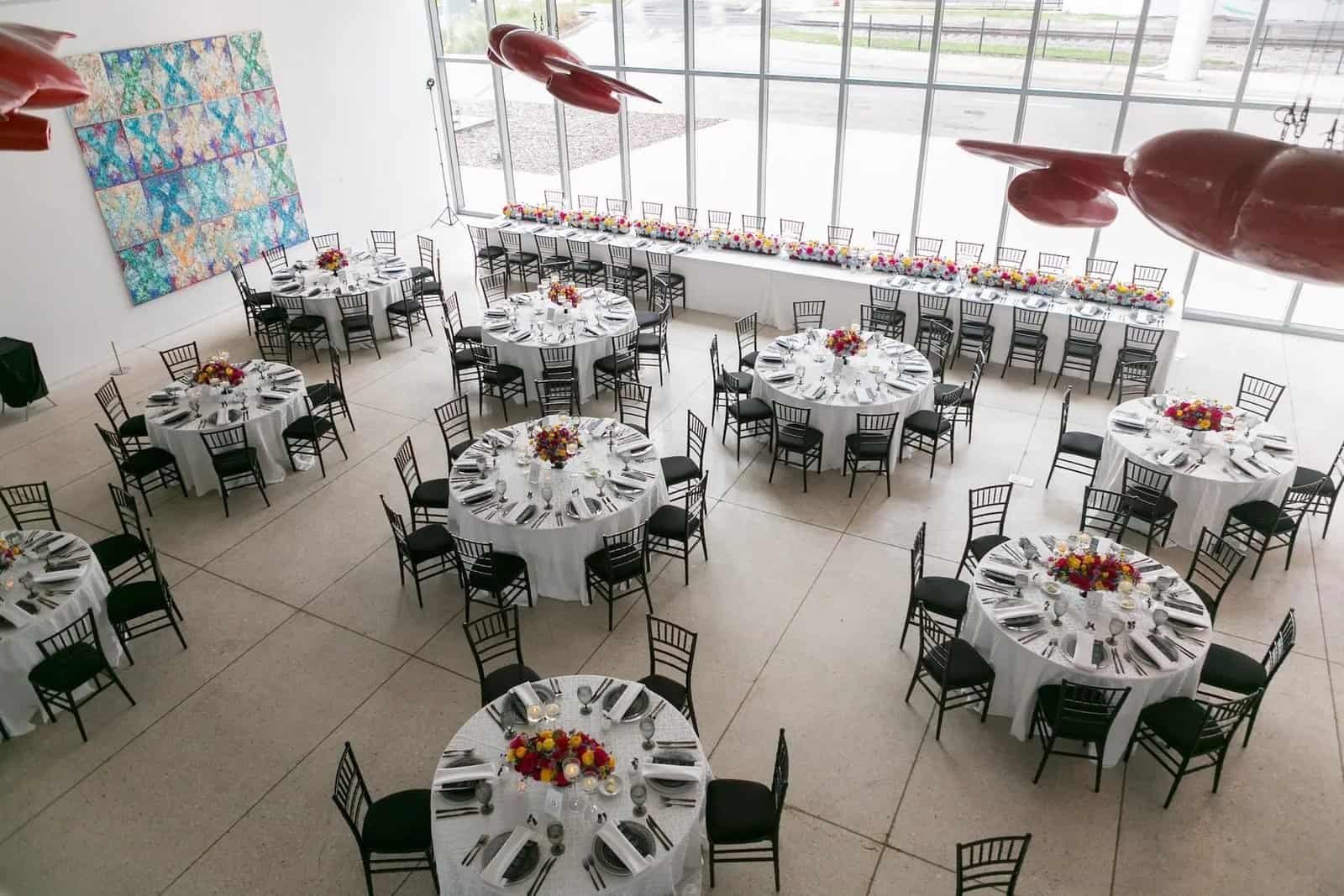
The floor plan deliberately mixed table shapes. Rounds sat nearest the windows beneath the museum’s red ceiling sculpture, while long feasting tables ran down the far side against a large panel of color. Neither shape was chosen to replace the other — running both is what stops a 110-guest room reading like a banquet hall, and it gives a space with this much architecture somewhere to breathe.
Chargers, flatware and goblets down a long table
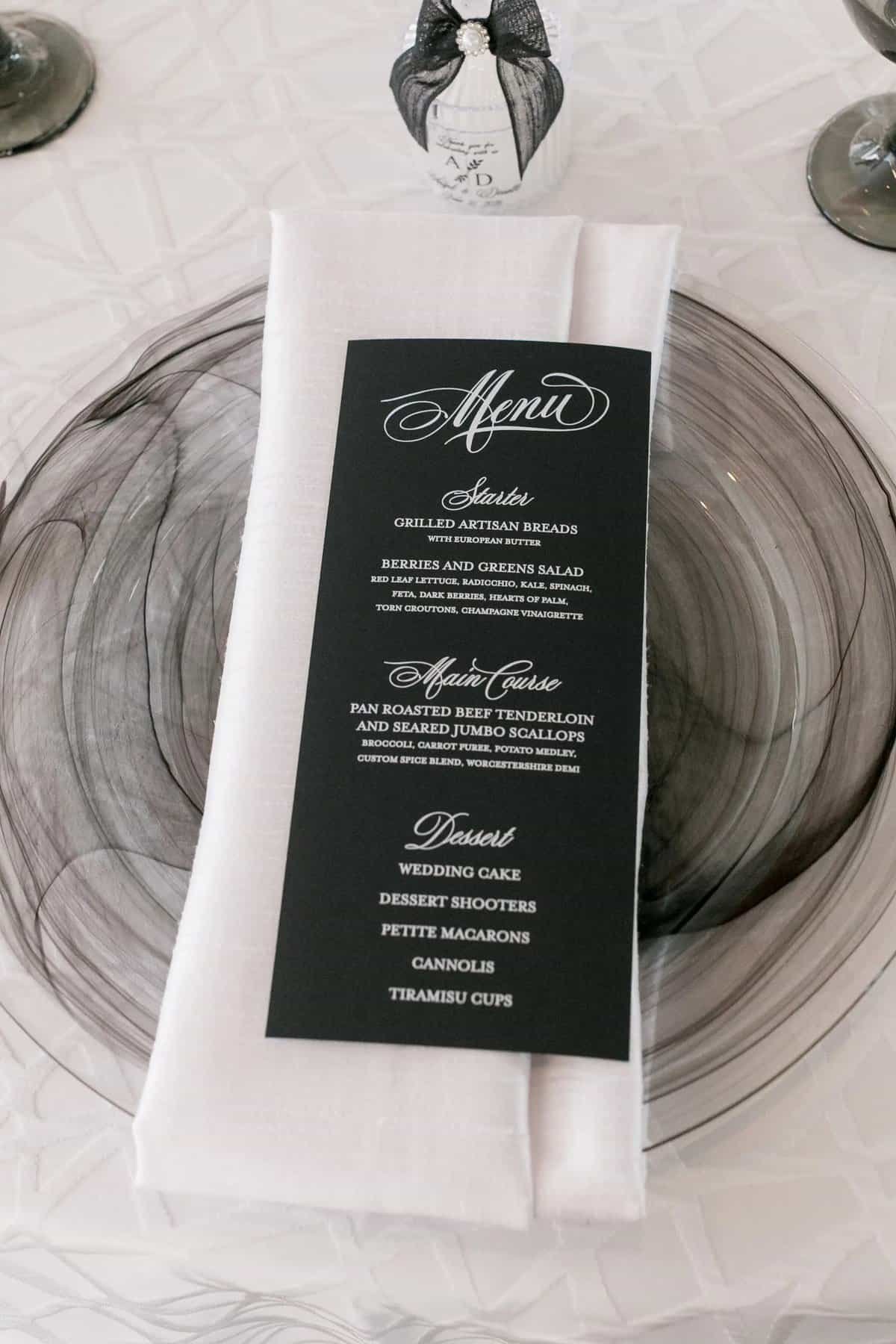
Gabro’s chargers, flatware and goblets dressed both table shapes. On a feasting table the place setting is doing structural work, not just decorative work: repeated down a long run, chargers set a rhythm that keeps the table from reading as an unbroken stretch of linen. Marbled chargers carried the black-and-white theme at each seat, with the menu laid on top.
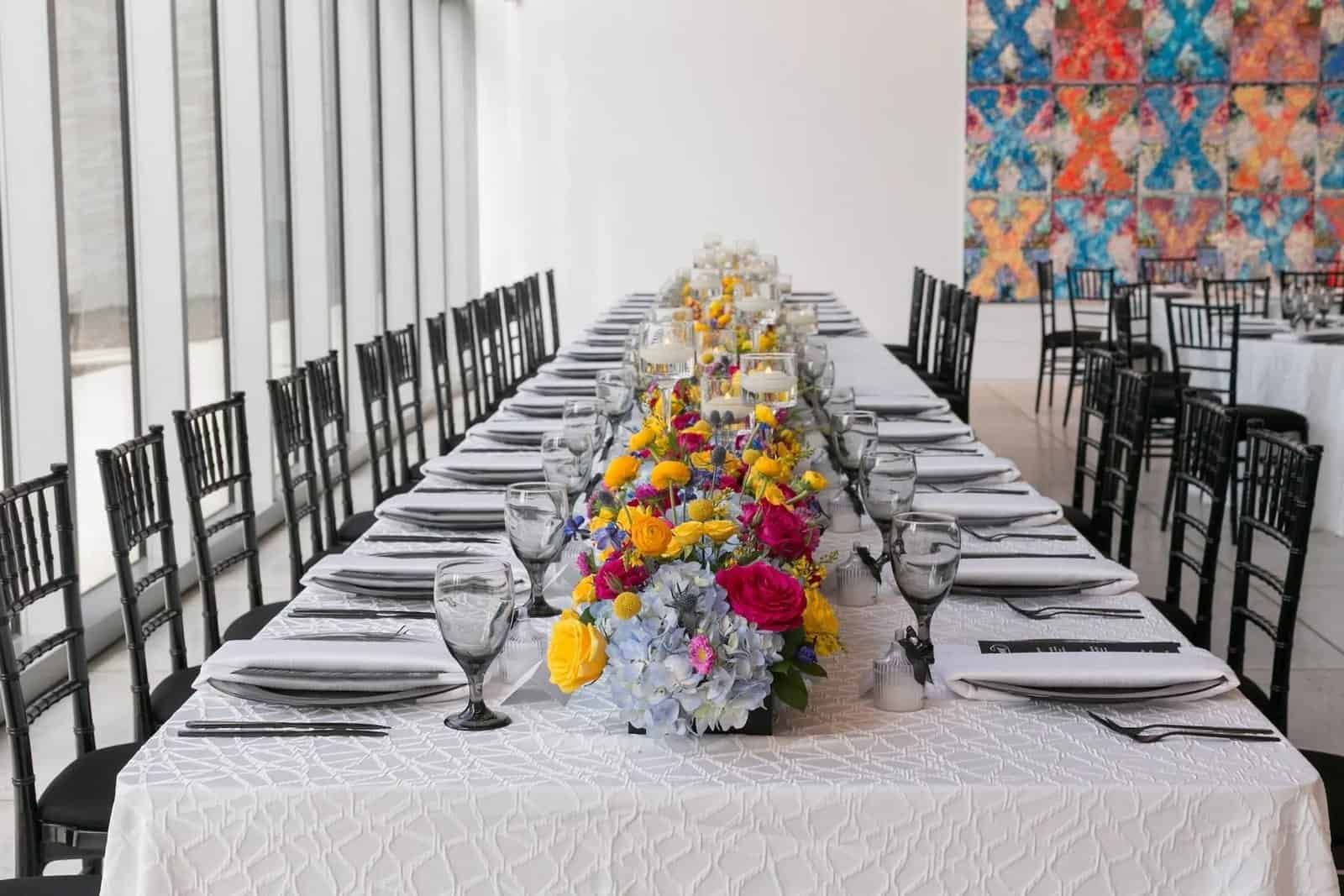
Glassware matters more on a table like this than people expect. Goblets are the tallest thing at each place setting once centrepieces are kept low, so they are what catches window light down the length of the run — and with a wall of glass on one side, that is most of the evening.
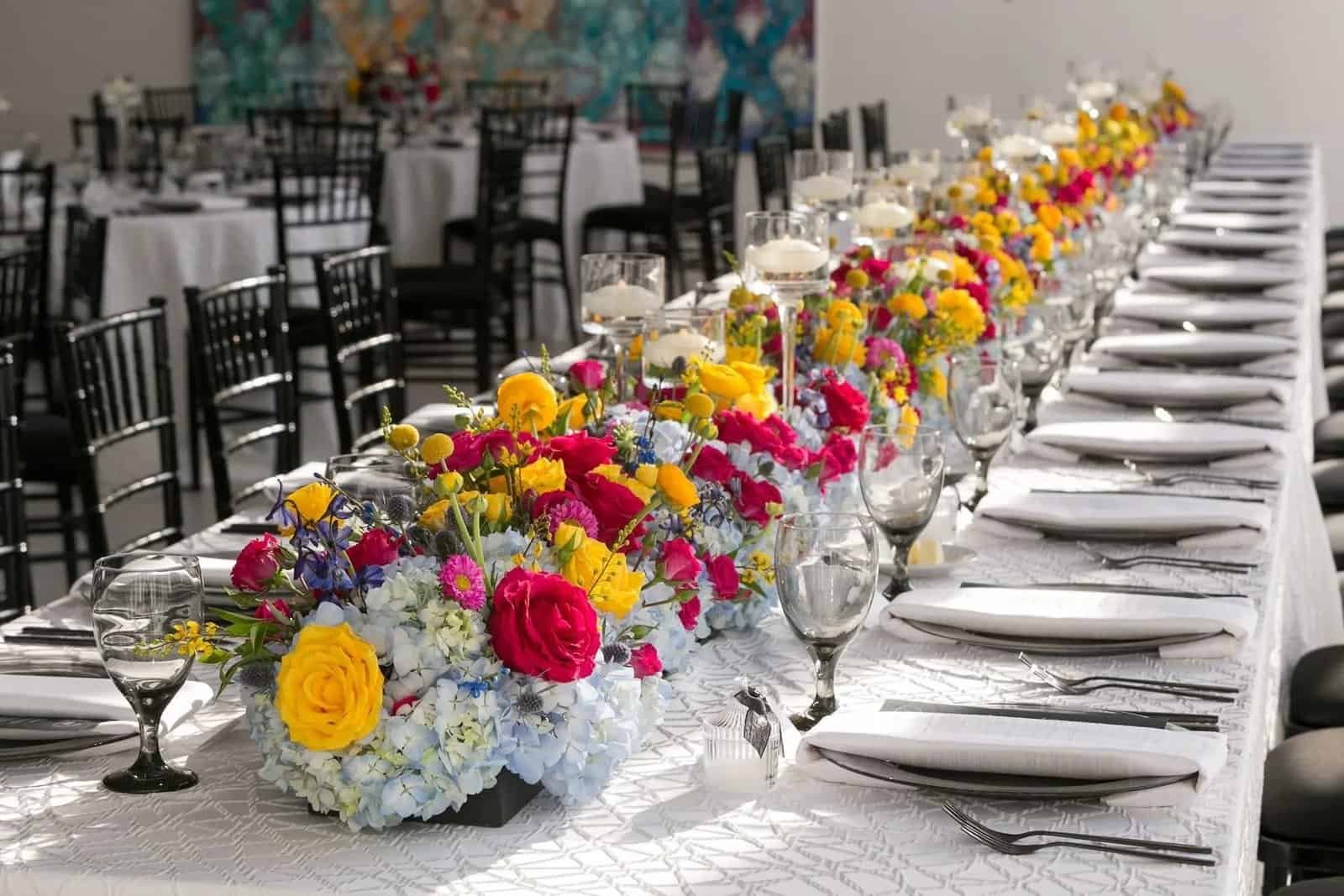
Flatware is the detail guests notice last and photographers notice first. Down a feasting table it repeats dozens of times inside a single frame, so an over-ornate pattern reads as noise at precisely the scale where the table is supposed to look calm. Plain weight, consistently set, is doing the work here.
A checkerboard dance floor, a pink lounge and a round bar
The dance floor was the reception’s other statement piece: a black-and-white checkerboard laid in front of the windows, sitting squarely in the black-and-white half of the couple’s brief. A patterned floor is a commitment — it reads as decor whether anyone is dancing or not — and in a room this colorful it works precisely because it stays graphic rather than adding another hue.
Pink velvet lounge furniture sat directly alongside it, with a white round bar anchoring the corner. Putting the lounge beside the floor rather than in a separate room keeps the people taking a break inside the party instead of outside it, and it means the floor never looks abandoned from the room’s main sightline.
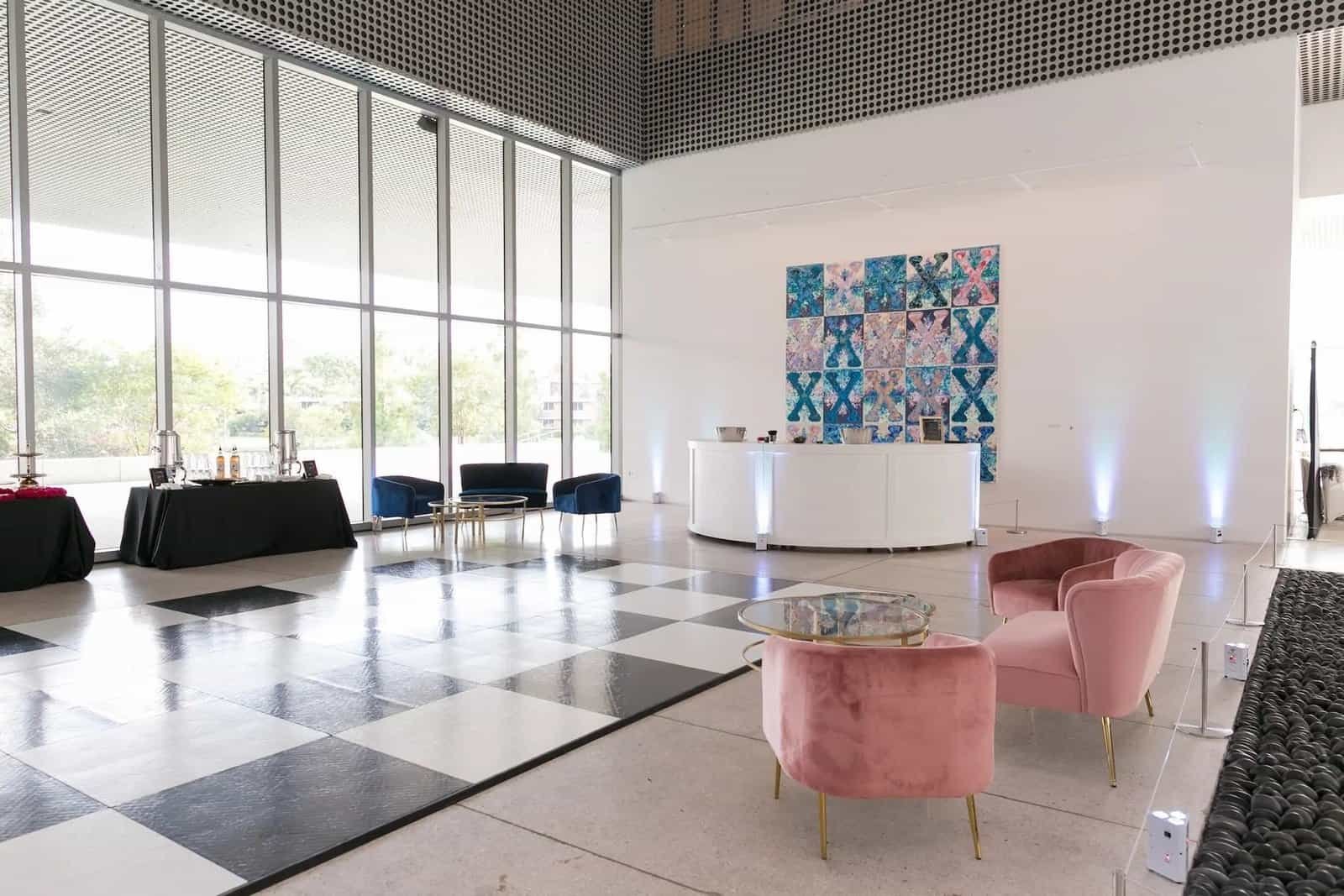
Finish matters as much as pattern. A floor laid level and tight, with edging that sits flush to the surrounding surface, is what keeps a checkerboard reading as a design decision rather than as equipment — and it is what keeps the perimeter safe once the room fills up.
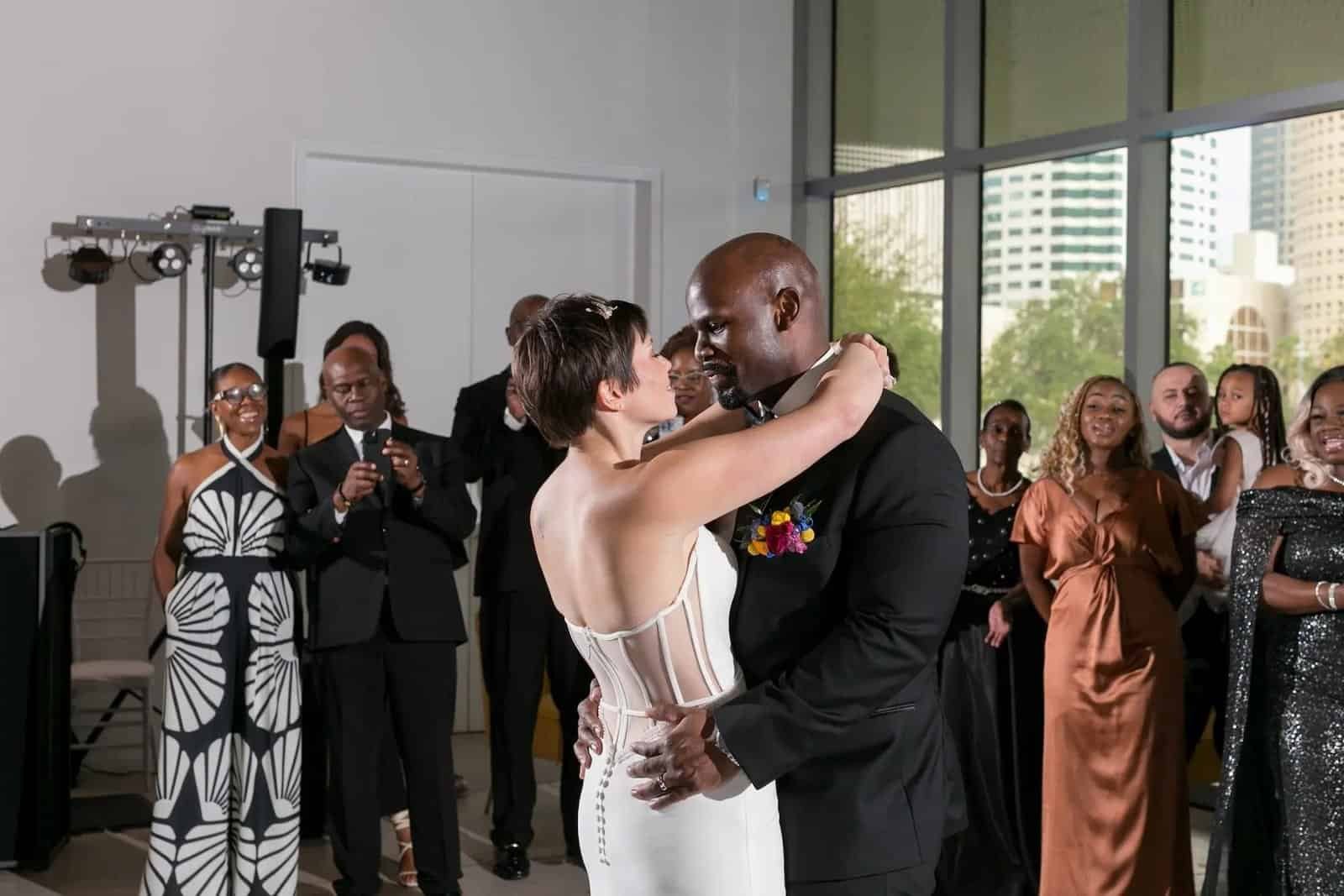
“The decor injected the classy vibe we envisioned, and added an element of fun for the dance floor,” Angel said. By her account it earned its place: “I’ll never forget the dancing — we are a crowd that dances!” Her advice to other Tampa Bay couples was short. “Trust the process, have fun, and hire a planner.”
Shop this look


Planning something in a museum, a gallery, or any venue with strong opinions of its own? Those spaces reward rentals chosen to work with the architecture instead of over it. Tell us what your venue gives you and what it will not let you touch, and we will build the rental plan around it — get in touch with Gabro Event Services.
Wedding Credits
Venue: Tampa Museum of Art
Planner: Coastal Coordinating
Photography: Carrie Wildes Photography
Rentals: Gabro Event Services — chiavari chairs, ceremony stage and facade, draping, chargers, flatware, goblets, dance floor, round bar and lounge furniture
Originally featured on: Marry Me Tampa Bay