A beach wedding looks like the simplest thing you can do and is one of the hardest to supply. There is no floor, no walls, no power, no shade and no vehicle access, and the surface everything stands on moves under load. Add an onshore breeze, salt in the air and a hard curfew set by a beach permit, and almost every ordinary rental assumption stops applying.
This tropical pink and orange wedding at Sunset Beach House on Treasure Island ran the ceremony and the dinner on open sand. Gabro supplied the tables, the chairs, the linens and the dance floor. Here is what each of those has to survive to work on a Gulf beach.
Timber chairs, on sand, in wind
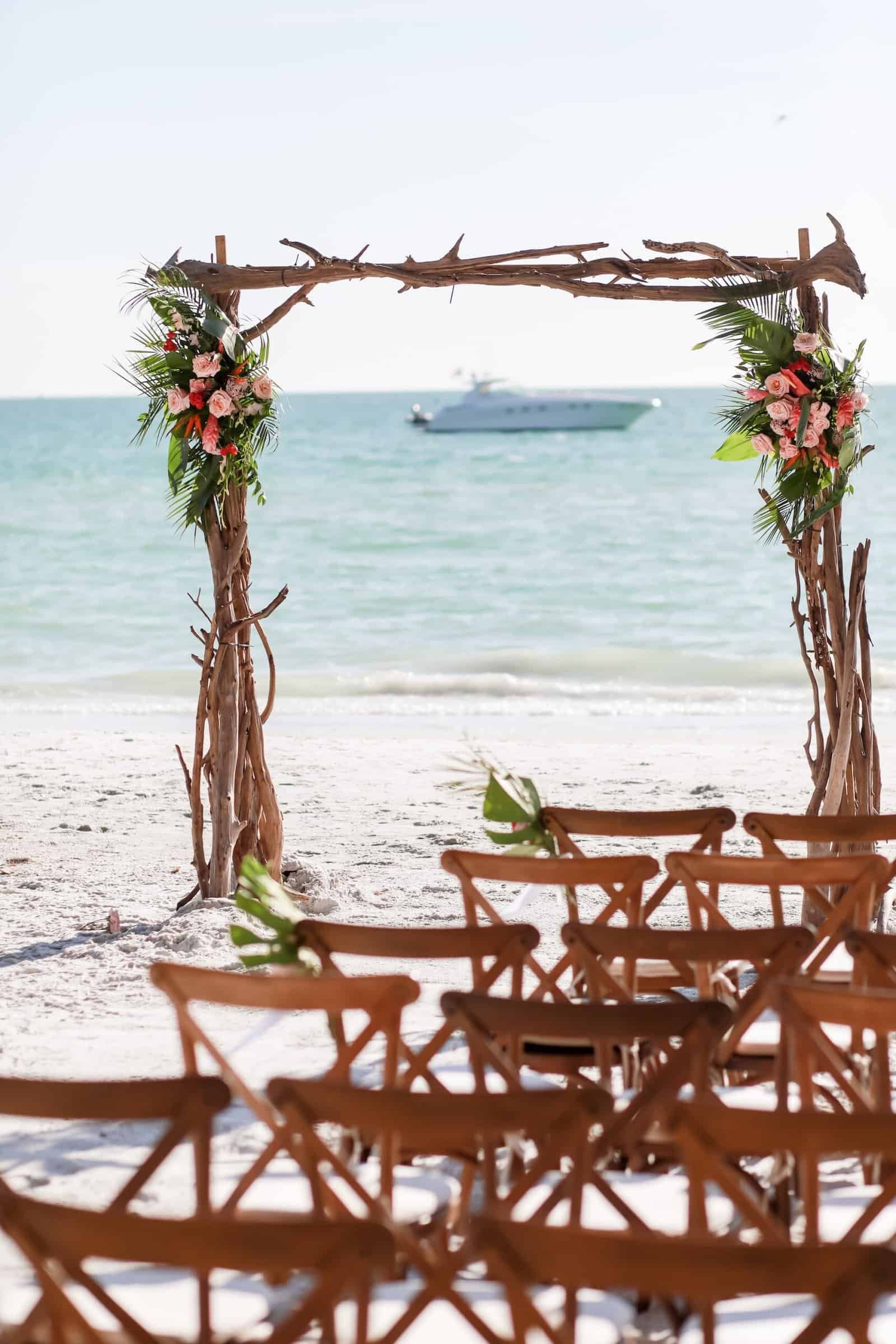
The ceremony was set with timber cross-back chairs directly on the sand. Chair choice on a beach is decided by physics rather than by style. Sand is the least supportive surface a chair will ever stand on: it has almost no bearing strength until it is compacted, and it re-compacts unevenly every time someone shifts their weight.
That rules out the fine ballroom frames that work indoors. A narrow leg tip on a chiavari concentrates a guest’s weight onto four small points and simply disappears into soft sand. A cross-back has a heavier frame and a broader foot, so the load spreads and the chair stays where it was put. It is also heavy enough not to move in a gust, which matters on an open beach where there is nothing at all to break the wind.
Setting them is slower than it looks. Every chair is bedded rather than placed — worked down until it sits level and stops rocking — and the rows are re-walked once guests are seated, because that is when the sand actually settles. There is no dolly access on soft sand either, so a full ceremony count is carried by hand from the nearest hard standing, which is what drives the crew size and the load-in window on a job like this. Afterwards the finish gets attention: salt and fine sand are abrasive, so chairs are brushed down and dried rather than stacked damp.
Shop this look

Tables, and a hard surface, on a moving floor
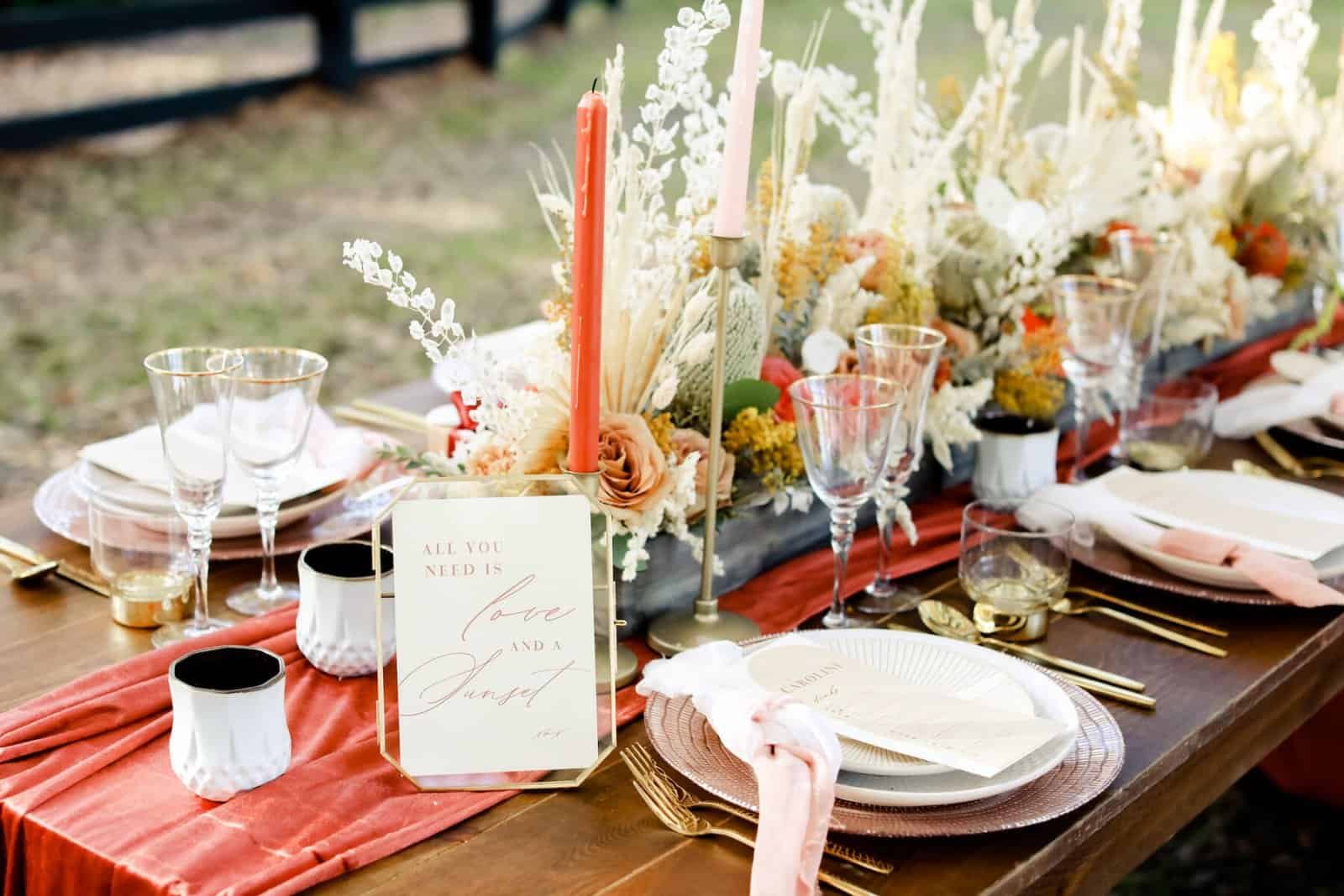
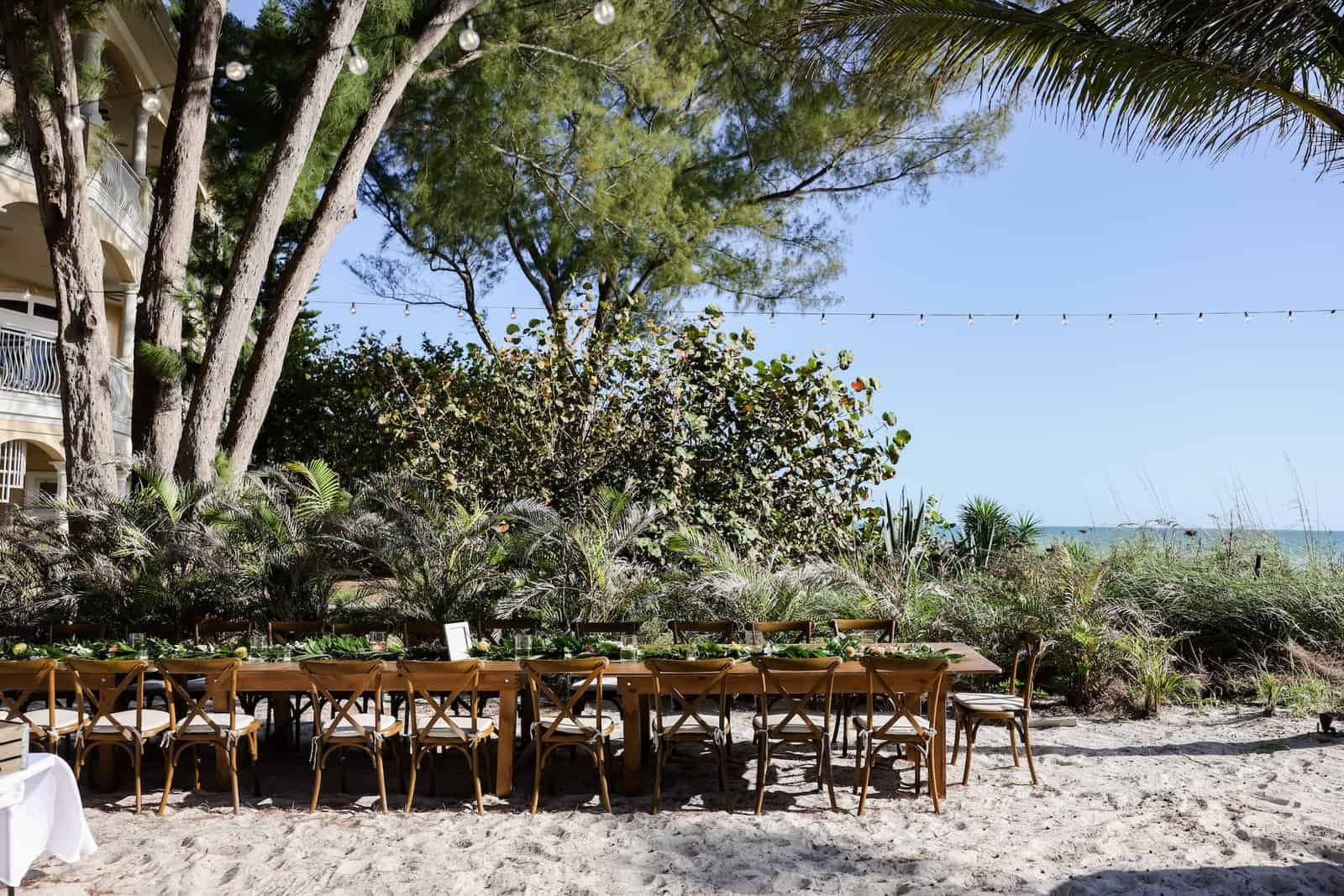
Dinner ran on long wood tables set behind the dune, with a round or two at the edges. Long runs are the right instinct on a beach because they give an open, featureless space a line to follow — without one, tables scattered on sand read as a picnic rather than as a dinner.
Levelling is the whole job. A long run on sand is levelled leg by leg, usually by digging a foot in rather than by packing under it, because anything packed underneath works loose as the sand shifts. The run is then checked again once the settings are on, since weight is what makes a leg sink. Position matters too: tables go above the wet-sand line with real margin, since the tide comes in further than the morning site visit suggests, and they are kept off the softest, driest sand where nothing stays level for long.
The dance floor from the same order answers the problem the sand creates. Nobody dances on soft sand for long in formal shoes, and once shoes come off, a beach after dark is a place people stop moving. A laid floor gives an evening a defined, hard, level surface, and on sand it needs a proper subframe and ground protection underneath rather than panels dropped onto the beach — the load has to be spread or the whole thing settles into a bowl by the third song.
Shop this look

White linen, in Gulf sun and Gulf wind
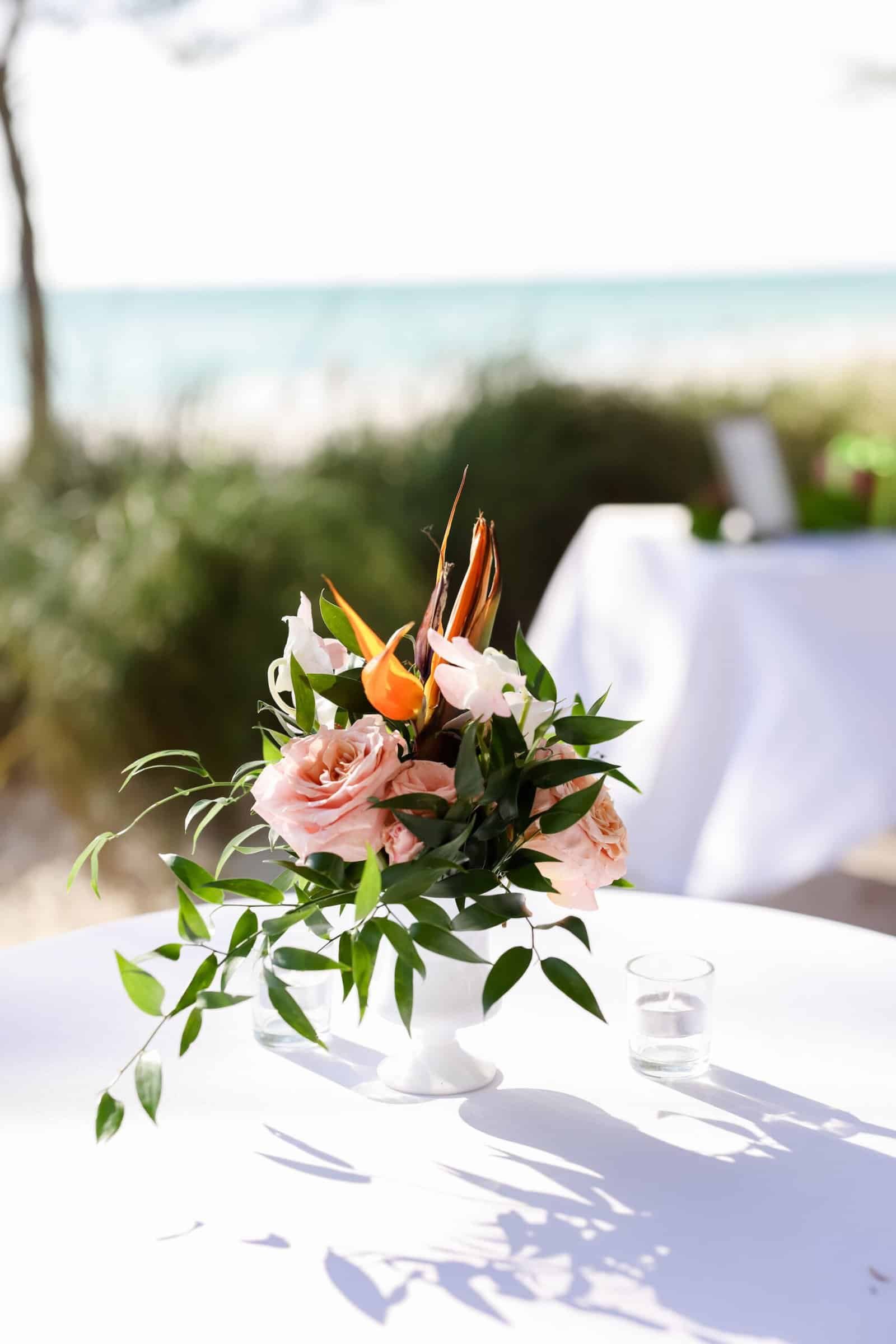
White linen on a beach table is the most photographed and least forgiving specification in this order. It looks exactly right against sand, water and tropical colour, and it has three specific enemies out there.
The first is sun. In direct Gulf light a white cloth stops reading as white and becomes glare, blowing out to pure paper in a photograph and taking the texture of the fabric with it. That is why linen works best on a beach either in shade, behind a dune, or once the sun has dropped — and it is a real argument for timing an outdoor dinner later than you think you need to.
The second is wind, and it is the one that ruins a setting. An unweighted cloth on an open beach is a sail with a table underneath it, and it will lift between the moment it is laid and the moment the glassware goes on. Linen outdoors is clipped or weighted at the corners as a matter of course, not as a contingency, and it is laid as late in the sequence as the schedule allows. The third is the sand and salt themselves: fine sand works into a weave and salt spray marks it, so beach linen comes back for a different laundering cycle than a ballroom cloth. None of that argues against using it. It argues for planning it, and for not laying it at two in the afternoon.
Shop this look

Planning a wedding on open sand?
Tables, seating, linens and dance floors come from one order across Tampa Bay and the beaches, carried in, bedded level and struck inside your permit window.
Wedding Credits
Venue: Sunset Beach House, Treasure Island · Planning: EventFull Weddings · Florals and Decor: Save The Date Florida · Entertainment: Graingertainment · Photography: Lifelong Photography Studio · Tables, Chairs, Linens and Dance Floor: Gabro Event Services · Originally featured on Marry Me Tampa Bay.