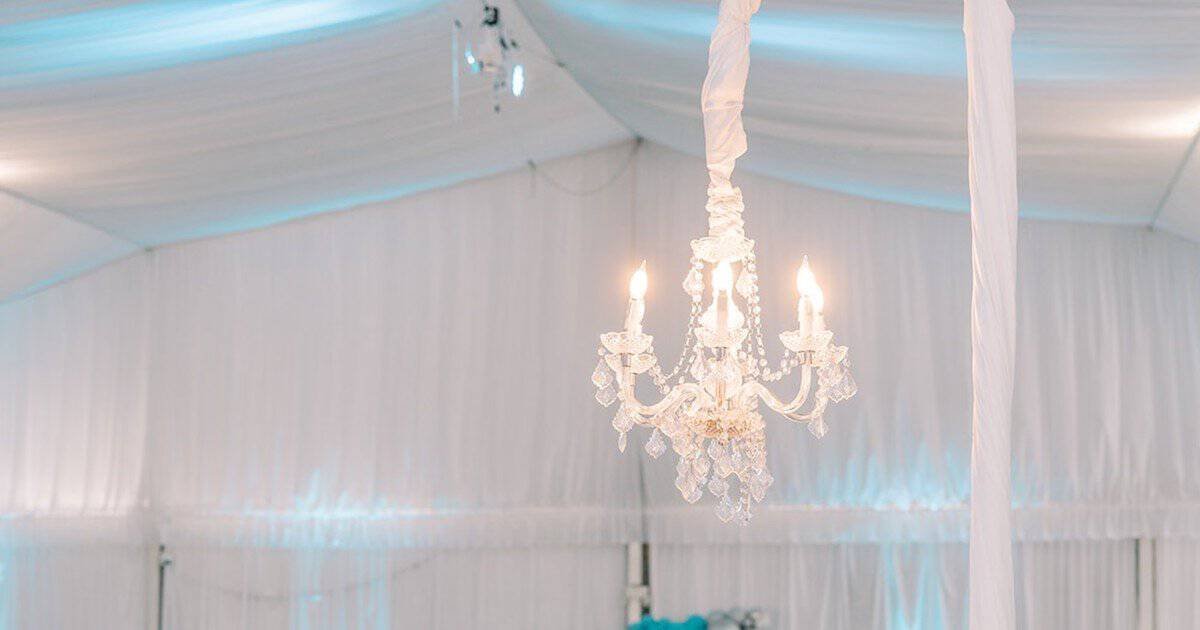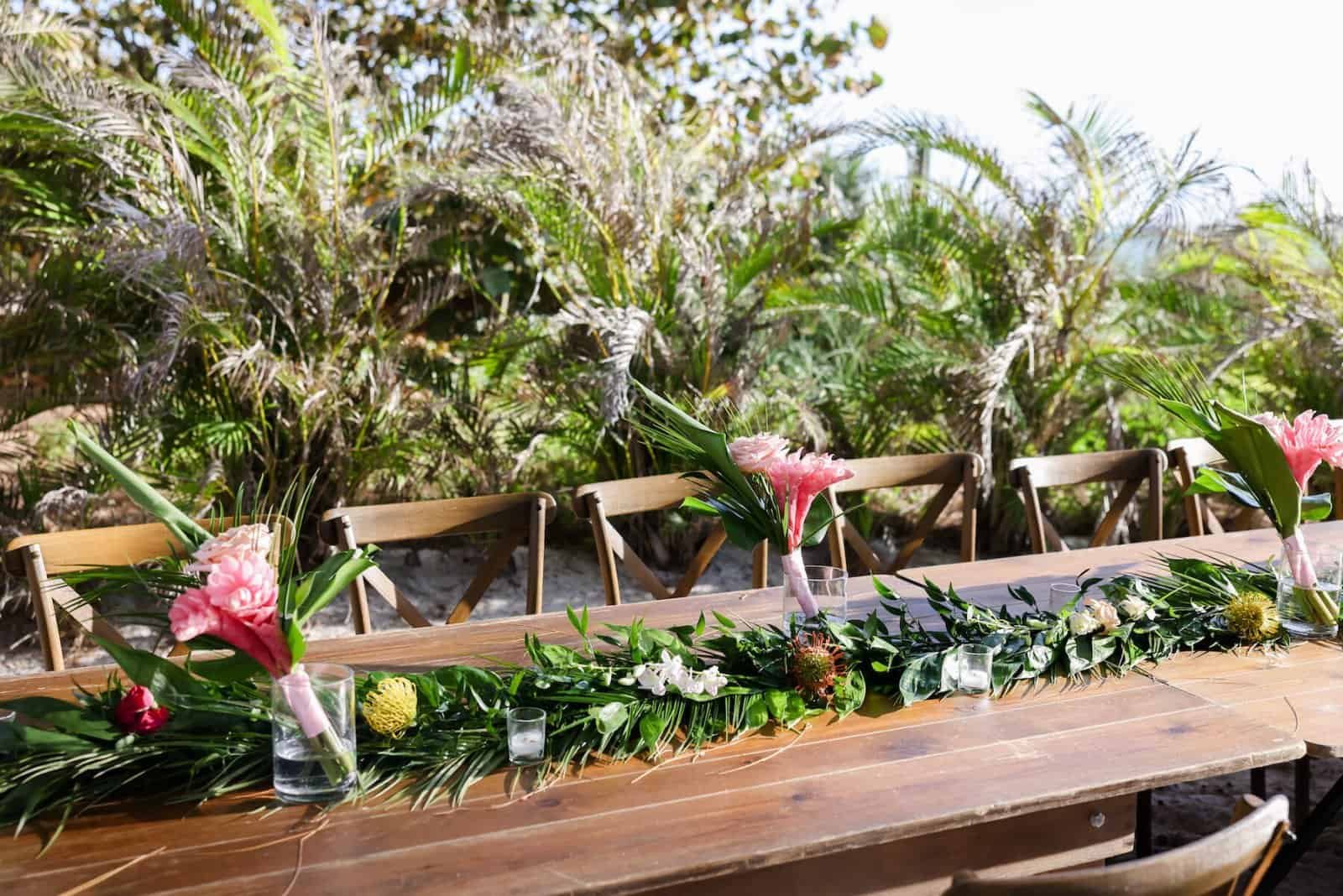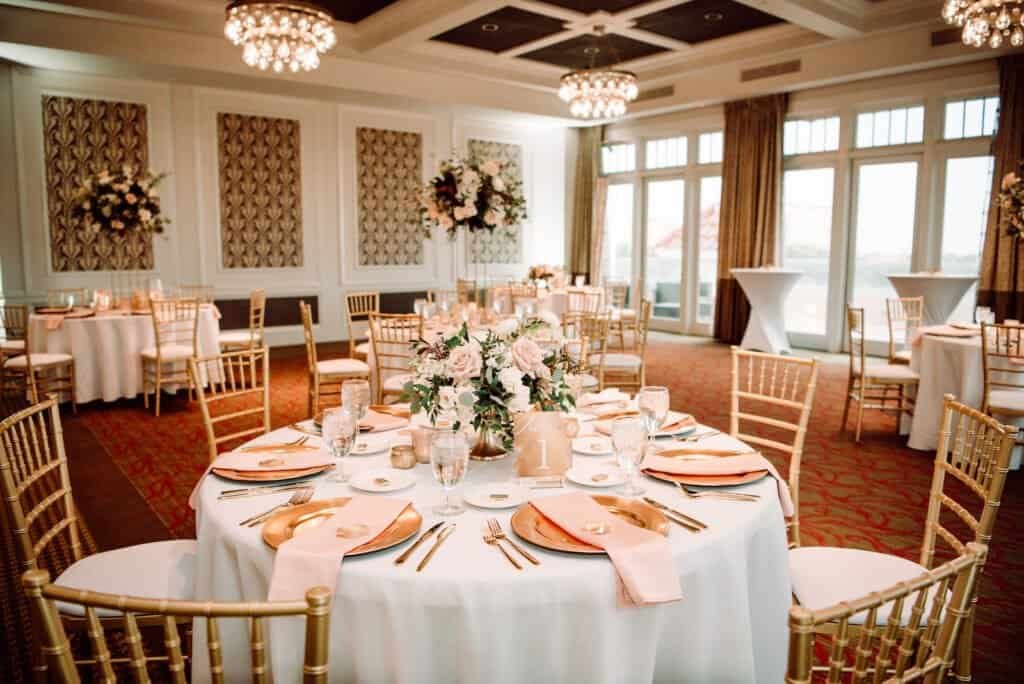
A downtown hotel ballroom is the opposite problem from a raw venue. Nothing is missing: there is carpet, there are house chandeliers, there are walls with doors, service bays and light switches in them. The work is not filling a space, it is editing one, and the three things that do most of that editing are the floor you dance on, the fabric you put over the walls and the light you throw at it.
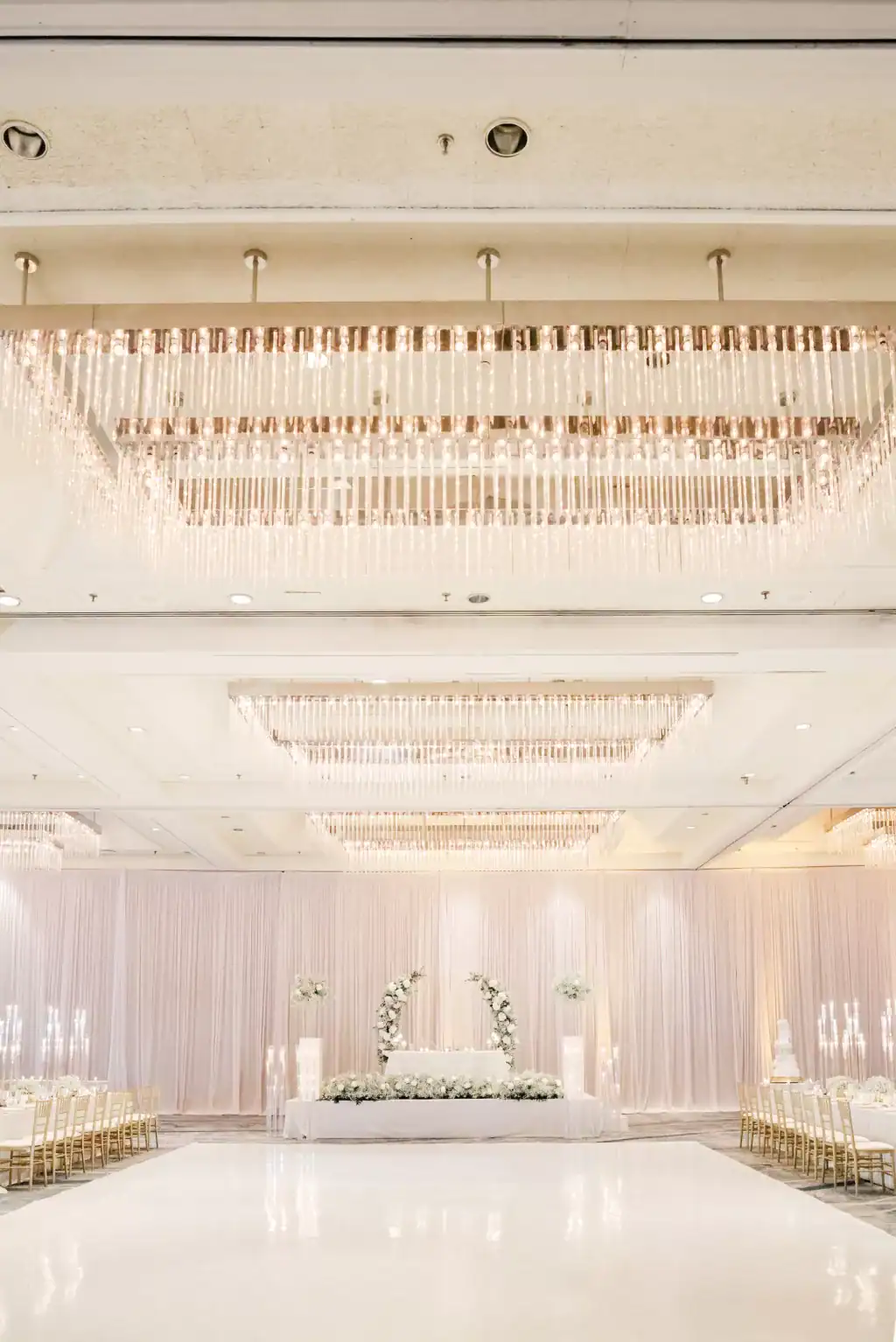
That was Gabro’s brief at this white and gold wedding at the Hilton Tampa Downtown: the dance floor, the draping and the lighting. Everything else in the room belonged to other vendors. Here is why those three specifications matter more in a hotel than almost anywhere else.
A white dance floor, placed before anything else
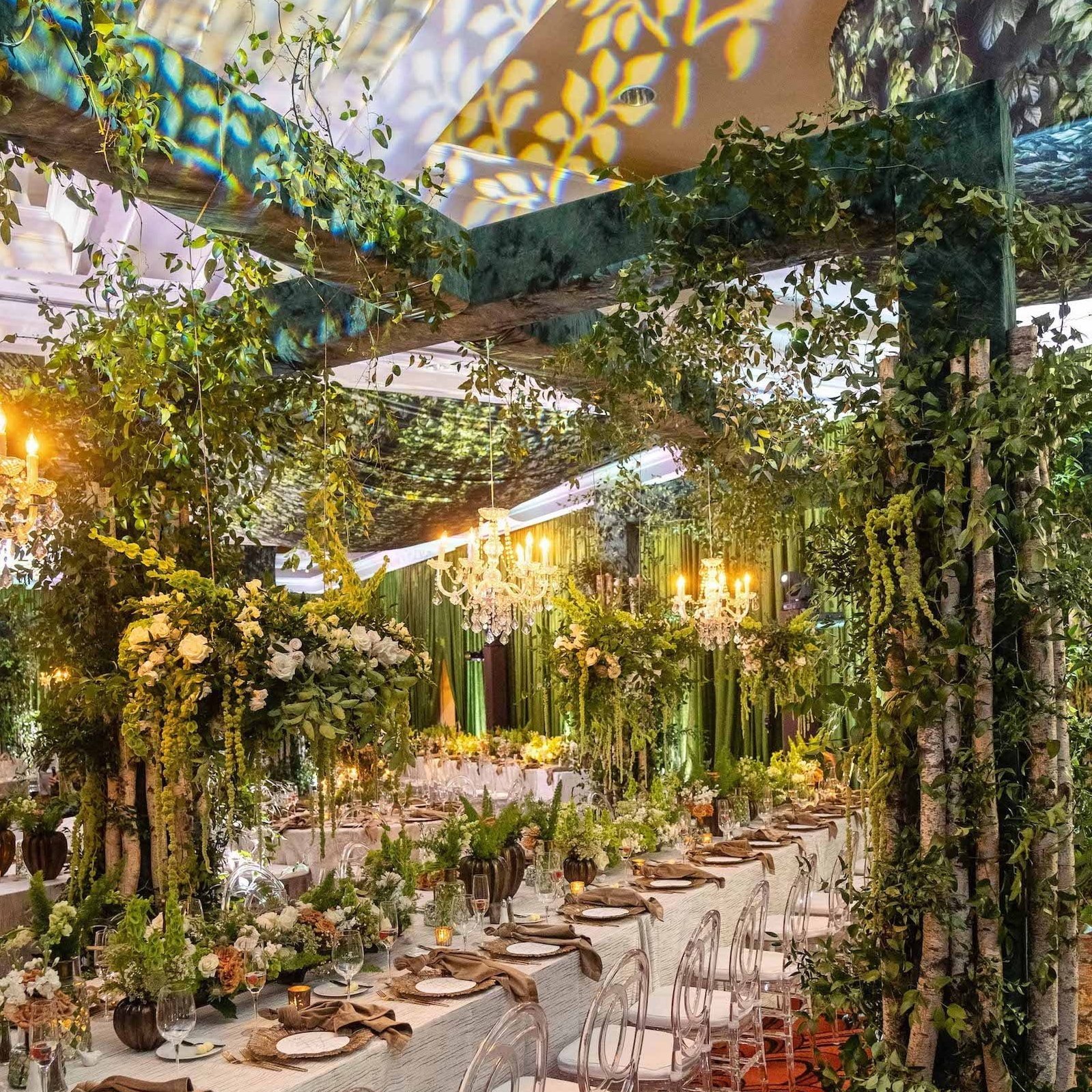
The dance floor here is white and sits at the centre of the room, with dining tables arranged around it. In a hotel that decision is really about the carpet. Ballroom carpet is patterned and dark for a practical reason — it hides twenty years of traffic — but it also absorbs light, kills the reflection under a couple’s first dance, and pulls a photograph towards its own colour. Laying a floor over it is the single change that most alters how the room reads.
White is the demanding choice and the right one for a scheme like this. It bounces the room’s light back up, which is why the wide shots here stay bright without the photographer adding flash, and it makes the dancing area obvious from every seat. The trade-off is honest: a white floor shows a scuff and a spill in a way an oak parquet does not, so it wants a quick pass by the crew between dinner and dancing, and it is a poor choice under an open bar with a dark red on the list.
Placement gets decided before the tables do. A dance floor is a fixed rectangle of subfloor and panels, and it has to be laid where the room can take it: clear of service doors, clear of the head table sight line, and square to the room rather than to the nearest wall. Sizing follows the guest count, not the room — an oversized floor reads as empty all night, which is the fastest way to make a full party look thin.
Shop this look

Draping that removes a hotel’s hardware
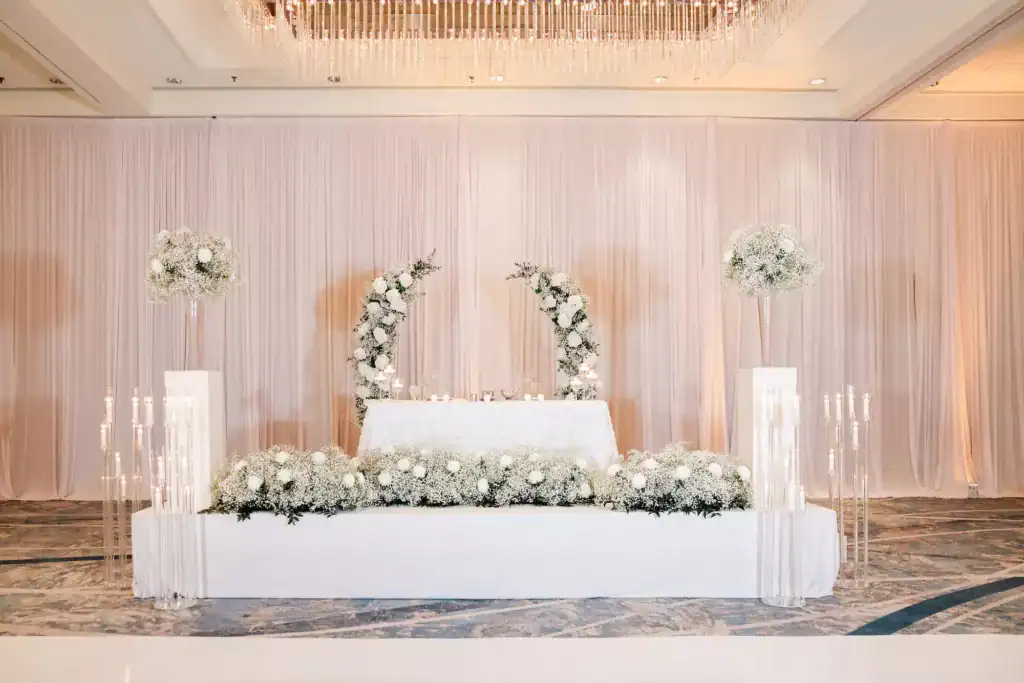
The walls were covered in full-height white drape, including a solid draped backdrop behind the head table. This is the least glamorous and most valuable rental in a hotel ballroom. Behind that fabric are the things a photograph cannot include: service entrances, thermostats, fire equipment, air-wall tracks and the seam where two function rooms were joined into one.
Drape also fixes the head-table problem. A sweetheart or head table needs something behind it, because every speech, every toast and every long-lens frame of the couple sitting down uses that wall as a background. A clean draped panel gives the photographer a consistent backdrop for the whole night, in a way that a patterned hotel wall or a set of double doors never will.
The engineering is simple but not optional. Drape is hung on telescopic uprights in weighted bases, and the base weight is sized to the height of the run — a tall drape line with light feet will lean, and once one upright leans the whole wall reads crooked in a wide shot. Runs are also planned around egress: a draped wall must never sit across a fire exit, which is usually what dictates where a run stops.
Shop this look
Lighting the fabric, not the ceiling
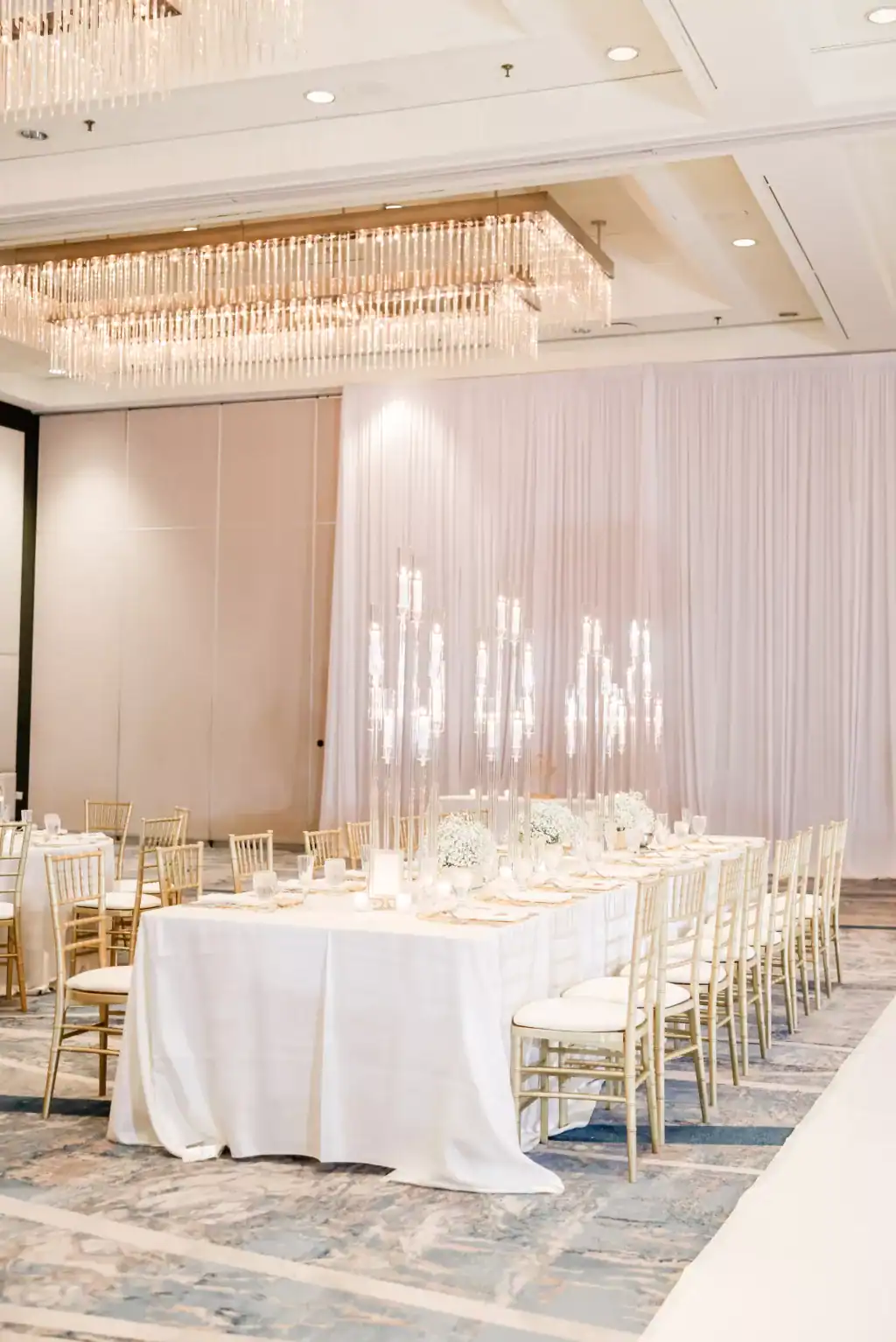
With the walls in white fabric, the lighting had somewhere to land. A warm wash across the drape is what gives this room its colour — the fabric is white, and the blush tone in the photographs is light, not cloth. That is the practical argument for pairing drape and lighting in the same order: white drape can be any colour you like on the night, and can be a different colour for dinner than it is for dancing.
Washing fabric is also gentler than washing a wall. A painted or papered hotel wall reflects a hard, uneven pool of colour with visible hot spots; fabric diffuses the same fixture into an even field. Fixtures sit at the base of the drape line, close in, aimed up, which keeps cables out of the aisle and out of frame.
The other half of the job is the floor. A white dance floor with nothing over it stays a bright rectangle all evening; lit from above and left brighter than the dinner tables once the meal ends, it becomes the place people go. Lighting is usually what decides that. When the tables stay as bright as the floor, guests keep sitting down.
Shop this look
Editing a hotel ballroom?
Dance floors, draping and lighting come from one order across Tampa Bay, planned around the room’s exits, sight lines and carpet rather than around a floor plan drawn somewhere else.
Wedding Credits
Planning: Special Moments Event Planning · Venue: Hilton Tampa Downtown · Photography: Lifelong Photography Studio · Dance Floor, Draping and Lighting: Gabro Event Services · Originally featured on Marry Me Tampa Bay.